
Book Appointment Now

8 Best Beginner Chef Knives for 2026

Picking up cooking as a hobby often lands you in front of a wall of intimidating blades. The good news: a thoughtful entry-level chef’s knife transforms prep work from a chore into the best part of the recipe. Beginners who choose a well-balanced, forgiving blade learn faster, cut safer, and actually enjoy the time at the cutting board. This lineup focuses on knives that reward good habits instead of punishing small mistakes, so your first knife feels like a trusted tool from the very first onion.
The Essentials At A Glance
PickWhy We Picked ItBest ForAction

Editor’s Choice
ZWILLING Four Star 6-inch Chef’s Knife
Refined German craftsmanship
First-time knife owners

Premium Pick
Sunnecko 8-inch Japanese Damascus Chef Knife VG10
Layered Damascus visual appeal
Aspiring home chefs

Value Pick
Sunnecko 8-inch Chef Knife with Pakkawood Handle
Sharp edge at a friendly cost

Everyday Favorite
imarku Japanese Chef Knife 8-inch
Reliable all-around gyutou
Daily meal preppers
Beginner Friendly
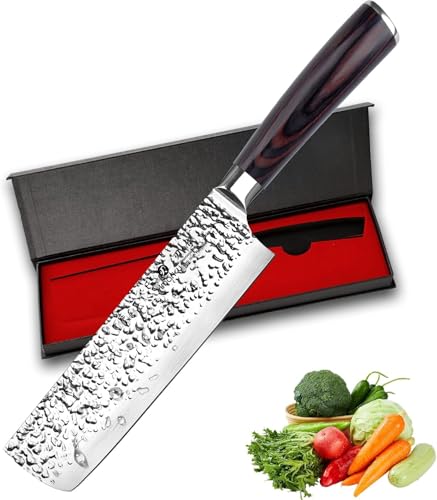
imarku Nakiri Knife 7-inch
Flat-edge vegetable control
Veggie-heavy home cooking
Home Essential
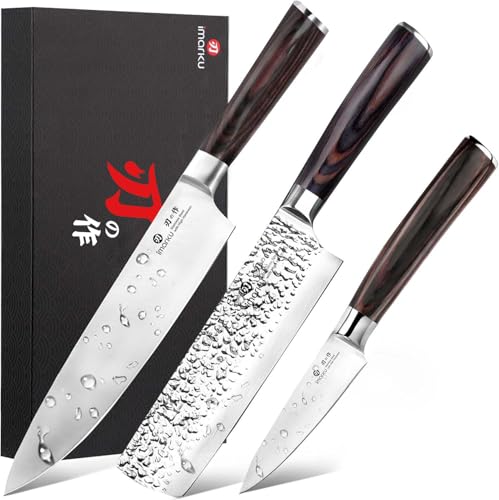
imarku 3-Piece Japanese HC Stainless Steel Knife Set
Complete starter trio
Setting up a first kitchen

Performance Leader
Made In 8-inch Damascus Steel Gyuto
Crafted-in-Japan precision
Skill-building enthusiasts

Budget Friendly
Sunnecko 7-inch Nakiri Knife
Wide blade for batch prep
Big-batch meal cooks
A Deeper Look At The Lineup
The ZWILLING Four Star is the kind of knife many home cooks graduate to, but it works beautifully as a first serious blade too. The 6-inch size is approachable for smaller hands, and the seamless transition from bolster (the thick metal band where the blade meets the handle) to handle keeps your grip secure during long prep sessions. If you tend to cook in a compact kitchen or feel nervous around an 8-inch blade, the shorter profile here removes that hesitation.
Compared to the longer chef’s knives later in this list, the Four Star leans into control rather than reach. The European-style geometry is friendly to a rocking cut, which is the motion most beginners learn first.
Practical Advantages
- The 6-inch blade is a confident size for beginners who find 8-inch knives unwieldy.
- Continuous bolster adds knuckle clearance and balance during repetitive chopping.
- Stainless steel construction shrugs off moisture and forgives occasional hand-dry neglect.
- Resharpens reliably, so the knife can grow with your skills over years.
Worth Noting
- The 6-inch reach feels short for breaking down large melons or wide squash.
- Out of the box, the edge favors a working sharpness rather than a razor shave, so plan on a hone or light whetstone session early on.
Feature Snapshot
Right Fit For
First-time knife owners with smaller hands or compact kitchens who want a refined, long-lasting European blade.
Consider Something Else When
You mostly prep large vegetables and want extra knuckle clearance, in which case the imarku Japanese Chef Knife 8-inch offers more blade length for similar control.
Where the ZWILLING Four Star offers German refinement, the Sunnecko Damascus leans into the visual drama of a layered Japanese-style blade. The ripple pattern is more than decorative, though: those 67 layers of Damascus steel (steel forged by folding and layering different alloys to create a hard cutting core wrapped in a flexible, patterned exterior) wrap around a VG10 core, which is a high-carbon stainless steel known for holding a fine edge. The result feels light in the hand and eager to slice through tomatoes and herbs without crushing them.
For beginners stepping up from a starter knife, this one rewards the lighter, more precise cuts that Japanese profiles encourage. The 10 to 12 degree edge is notably thin, so the knife parts ingredients with a clean, almost gliding motion.
Useful Touches
- VG10 core steel holds an edge through long weekend prep sessions.
- Layered Damascus pattern resists corrosion better than many entry-level carbon blades.
- The thin edge geometry makes herbs, tomatoes, and boneless proteins feel effortless.
Trade Offs
- The acute 10 to 12 degree edge is fragile against bones, frozen food, and twisting cuts.
- Owners commonly report the handle finish needs careful drying to stay pristine.
Whose Shelf It Belongs On
Aspiring home chefs who want a slice-forward, Japanese-style blade and will respect the thin edge.
Skip It When
You cook a lot of root vegetables and want one knife for everything, since the imarku Japanese Chef Knife 8-inch is a more forgiving all-rounder for the same 8-inch reach.
Sunnecko’s Pakkawood-handled chef’s knife is a friendly bridge between the brand’s layered Damascus model and a more wallet-friendly build. Pakkawood is hardwood that’s been impregnated with resin under pressure, giving you a warm, wood-like grip that won’t crack with water exposure. The 12 to 15 degree edge geometry lands in a sweet spot for beginners: sharp enough to feel premium, durable enough to forgive beginner mistakes.
It also ships with a sheath, which is a nice touch for dorm kitchens, small apartments, or shared cooking spaces. Compared to the open-handle designs on the imarku knives below, the included sheath makes storage easier when drawer space is tight.
Positive Points
- Resin-impregnated wood handle stays stable through wash cycles and humid climates.
- 12 to 15 degree edge offers a real balance of sharpness and durability.
- Included sheath simplifies safe storage in shared or small kitchens.
Points To Keep In Mind
- The hand-sharpened edge will need routine honing to keep that out-of-box feel.
- Edge retention sits below the VG10-cored Sunnecko Damascus model just above it.
Best Suited To
Weeknight home cooks who want a sharp, attractive knife with a friendly handle and protective sheath.
Look Elsewhere When
You want a full set right away, since the imarku 3-Piece Japanese HC Stainless Steel Knife Set bundles your first three core knives for a similar investment.
imarku’s standalone 8-inch gyutou is the definition of a daily workhorse, and a gyutou is simply the Japanese equivalent of a Western chef’s knife with a slightly thinner, more slice-oriented blade. The high-carbon stainless steel keeps the cost approachable while still feeling substantial in hand. You may find the blade geometry lands somewhere between the German heft of the ZWILLING Four Star and the thinner Japanese style of the Sunnecko Damascus, which makes it a comfortable middle ground.
It’s a great first knife if you want one tool that handles vegetables, boneless meats, and bread without a learning curve. The shape is forgiving whether you push-cut or rock.
Bright Spots
- High-carbon stainless steel balances durability with edge retention at an entry-level cost.
- 8-inch blade is long enough for batch prep yet manageable for most hand sizes.
- The handle shape suits both pinch-grip and classic grip styles as your technique evolves.
Small Caveats
- Out-of-box sharpness varies; a quick honing or light sharpening is common practice.
- Not suited for bones, frozen blocks, or twisting through tough squash skin.
Feature Snapshot
Made For
Daily meal preppers who want one reliable 8-inch knife to learn technique on without overthinking maintenance.
Reach For A Different Pick When
Vegetables dominate your cutting board, since the imarku Nakiri Knife 7-inch offers a flat edge that feels more natural for straight-down chopping.
The nakiri style is a Japanese knife built specifically for vegetables, with a flat edge that runs straight from heel to tip. That flat profile removes the rocking motion most beginners struggle with, so you push straight down through cabbage, carrots, and herbs. imarku’s 7-inch nakiri adds a 15 degree edge angle and a shape that helps new cooks build clean, consistent cuts quickly.
If your cooking leans stir-fry, salad, or sheet-pan vegetables, this is the knife that makes prep feel almost meditative.
Real Benefits
- Flat edge simplifies technique, no rocking required for clean cuts.
- Wide blade acts as a guide, pushing chopped vegetables off the board and into the pan.
- 15 degree edge is sharp out of the box and forgiving for new knife owners.
Honest Caveats
- The straight edge is not great for rocking through herbs or rounded proteins.
- Works best as a companion piece, so most cooks will still want a general-purpose chef’s knife on hand.
Who Will Love This
Veggie-heavy home cooks who want to nail precise cuts without a long learning curve.
Another Choice May Suit When
You need one knife to do everything, in which case the imarku Japanese Chef Knife 8-inch is a more versatile single-blade answer.
For someone building a kitchen from scratch, a 3-piece set removes the guesswork from day one. imarku’s trio covers the three tasks beginners hit most: an 8-inch chef’s knife for general prep, a utility knife for mid-sized produce, and a paring knife for detail work. All three share the same Pakkawood handle, so the grip feels consistent as you move between blades.
The shared 15 degree edge angle also means you can maintain the whole set with the same basic routine. It’s a tidy starter package, especially for a housewarming or a first apartment.
Good Reasons To Consider
- Three coordinated blades cover nearly every weeknight prep task out of the box.
- Uniform handle design makes switching between knives feel seamless.
- High-carbon stainless steel is easy to maintain with basic honing.
A Few Limitations
- No block or magnetic strip included, so storage needs a separate solution.
- The 2.3mm blade thickness on the chef’s knife is sturdy but less slice-forward than higher-end picks.
Feature Card
Perfect Match For
Shoppers setting up a first kitchen who want a coordinated set rather than piecing knives together over time.
A Better Fit Elsewhere
You already own a chef’s knife and just want one specialized tool, since the imarku Nakiri Knife 7-inch fills the vegetable gap without redundancy.
Made In’s gyuto is the most spec-dense knife in this lineup, and one of the few that lists its numbers right on the product page. The 7 1/4 inch cutting edge, 2.3mm thickness, and 15 degree blade angle point to a knife designed for precision rather than brute force. The VG-10 core wrapped in 66 Damascus layers is the same premium construction style as the Sunnecko Damascus, but with a full-tang build, meaning the steel runs continuously from blade tip through the handle for added strength and balance.
For a beginner ready to invest in one knife for the long run, this one is built like a tool you hand down. The black POM (polyoxymethylene) handle is dense, water-resistant, and shaped for extended prep sessions.
Positive Takeaways
- Listed specs let you compare it apples-to-apples against other premium gyutos.
- VG-10 core and Damascus layering deliver long edge life between sharpenings.
- Crafted in Japan with a full-tang build for confident long-term ownership.
Practical Considerations
- Heft and balance reward a pinch grip, so beginners used to a full handle hold may need a short adjustment period.
- Premium build raises the bar for care; hand washing and prompt drying are widely advised.
Feature Card
Built With In Mind
Skill-building enthusiasts who want a single, well-documented blade to grow into for years of cooking.
Where A Sibling Pick Shines
You’re shopping on a tighter budget, in which case the imarku Japanese Chef Knife 8-inch gives a similar gyutou experience at a friendlier cost.
The Sunnecko nakiri rounds out this list with a wide, cleaver-style profile that doubles down on vegetable prep. Where the imarku nakiri is a focused slicer, this one leans into batch cooking: the tall blade gives you knuckles-clearance on big piles of greens and lets you scoop chopped ingredients straight into a bowl. The 12 degree edge is among the thinnest in this category, so clean slices through peppers and cucumbers come naturally.
Sunnecko also pitches it for boneless meat prep, which adds versatility for one-pan dinners. It feels like a hybrid between a nakiri and a small cleaver, which is genuinely useful when you’re prepping a stir-fry for four.
Noteworthy Benefits
- Wide blade profile handles large-volume chopping sessions comfortably.
- 12 degree double-bevel edge delivers clean cuts through firm vegetables.
- Versatile enough for boneless meat, broadening the knife’s role in your kitchen.
Some Limits To Know
- The 12 degree edge is thin, so it can chip if you hit a hidden seed pit or tough stem.
- Heft and blade height take up more drawer space than a typical 8-inch chef’s knife.
Who Should Grab It
Big-batch meal cooks who prep vegetables for a crowd and want a single specialty blade that moves a lot of food fast.
Swap It Out When
You want something more nimble, since the imarku Nakiri Knife 7-inch offers a similar flat-edge approach in a lighter, more compact package.
What To Weigh Before Buying Your First Chef’s Knife
A chef’s knife is the tool you reach for more than any other in the kitchen, so the small details add up fast. The right blade length, steel type, and handle shape all shape how cooking feels day after day, and a mismatch shows up as hand fatigue and ragged cuts. Beginners who spend a few minutes thinking about how they actually cook tend to land on a knife that stays in the rotation for years.
Blade Length And Profile
A 6-inch blade offers control for smaller hands and tight prep areas, while an 8-inch blade gives you reach for breaking down larger produce. Japanese-style blades typically have a flatter edge that rewards a push-cut, while German-style blades have more curve, supporting a rocking motion. Most beginners settle into a hybrid gyutou profile quickly because it handles both styles of cut.
Steel Type And Maintenance
High-carbon stainless steel is the common sweet spot for entry-level knives. It holds a working edge longer than basic stainless while resisting rust better than pure carbon steel. Thin edges, like a 10 or 12 degree grind, slice beautifully but demand more careful use, avoiding bones, frozen food, and twisting. Thicker edges around 15 degrees are more forgiving for new owners who are still building technique.
Handle Comfort And Grip
A handle that fits your hand makes long prep sessions feel shorter. Pakkawood, resin-treated hardwood, stays grippy when wet and resists cracking. POM (a dense, moisture-resistant plastic) handles like the one on the Made In gyuto are nearly indestructible and easy to clean. The best test is holding the knife in a pinch grip at the bolster; your index finger and thumb should rest naturally without strain.
Weight, Balance, And Build
Weight affects how the knife feels during repeated cuts. A lighter knife reduces fatigue and lets the edge do more of the work, while a heavier knife powers through dense produce with less downward pressure. Full-tang construction, where the steel runs the full length of the handle, adds durability and a centered balance point that many cooks prefer.
Key Considerations Across These Picks
Where Shoppers Go Wrong
A common slip is buying a knife that’s too long, because longer feels more impressive on paper. Many beginners find a 6 or 7 inch blade easier to control, and they cut more accurately as a result. Another mistake is chasing the thinnest edge possible without planning for the maintenance that comes with it. Thin edges demand careful honing, soft cutting boards, and an honest commitment to hand washing.
When Paying More Pays Off
Spending up generally buys you better steel at the core, a more refined handle, and tighter quality control during manufacturing. The Made In gyuto’s VG-10 core holds an edge noticeably longer than entry-level stainless, which means fewer sharpening sessions. A premium build also tends to be fully forged (a process where the blade is shaped from a single piece of heated steel) rather than stamped from a flat sheet, giving you better balance and a knife that feels alive in the hand. The upgrade is worth it when you cook most nights and want a tool that quietly disappears into the workflow.
Frequently Asked Questions
What size chef’s knife should a beginner start with?
Most beginners do well with an 8-inch blade, but a 6 or 7 inch knife is a great choice if you have smaller hands, a compact kitchen, or feel nervous around longer blades. Comfort matters more than the number on the box.
Is a Japanese or German style knife better for beginners?
German-style blades are typically more forgiving and easier to maintain, while Japanese blades offer thinner edges and lighter builds. A Japanese-style gyutou is a friendly middle ground that handles both push cuts and gentle rocking.
How often should a beginner sharpen a new knife?
Light honing on a honing rod (a smooth steel or ceramic rod used to realign a blade’s edge between sharpenings) every couple of weeks keeps most entry-level edges in good shape, with a full sharpening on a whetstone (a rectangular block used to grind and refine a knife’s edge) once or twice a year. Frequency depends on how much you cook and which cutting board you use.
Can one chef’s knife handle most kitchen tasks?
Yes, an 8-inch chef’s knife covers roughly 80 percent of prep work, from vegetables to boneless proteins. Specialty knives like a nakiri or paring knife help with specific tasks but are not essential on day one.
What cutting board protects a chef’s knife best?
Wood and soft plastic boards are gentlest on edges. Glass, marble, and stone boards dull blades quickly and are best avoided for daily prep.
The Takeaway
Your first chef’s knife sets the tone for years of cooking ahead, and the right pick depends less on prestige and more on fit. Match the blade length to your hand size, the steel to your maintenance habits, and the weight to how you like to cook. Whichever knife from this list earns a place on your counter, treat it well: hand wash, dry promptly, and learn to hone. The rest is just practice, and practice is the fun part.
