
Book Appointment Now

8 Best Affordable Knife Block Sets for 2026

A decent set of kitchen knives changes the rhythm of cooking. You stop wrestling with a dull blade and start moving through prep work with a kind of quiet flow. The trick is finding that balance between quality steel, comfortable handles, and a block that actually fits on your counter without eating all the space. This roundup covers eight affordable knife block sets that bring real cutting performance to everyday home cooks, from compact minimalist kits to full 18-piece spreads built for family kitchens.
The Choices Worth Comparing
PickWhy We Picked ItBest ForAction

Editor’s Choice
Mercer Culinary M20000 Genesis 6-Piece Forged Knife Block Set
Forged German steel build
Serious home cooks

Value Pick
Astercook Knife Set with Block and Sharpener 15pcs
Full 15-piece coverage
New homeowners on a budget
Performance Leader
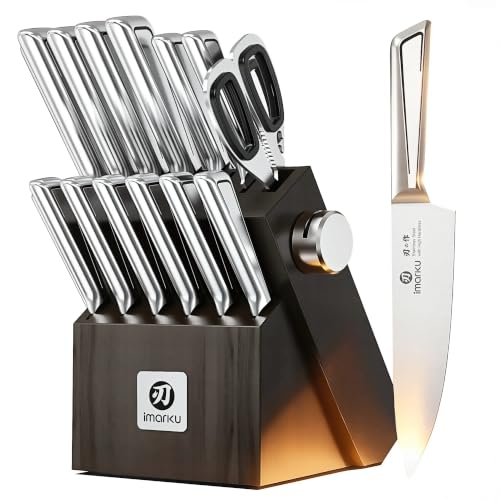
imarku Japanese High Carbon Stainless Steel Knife Set with Block
Razor-sharp Japanese edge
Precision cutting fans

Balanced Choice
imarku 14-Piece Knife Set with Block and Sharpener
Acacia wood block styling
Mid-range family kitchens

Design Standout
imarku 15pc Japanese HC Steel Knife Set (White)
Clean white block aesthetic
Bright, modern kitchens

Style Standout
Marco Almond 14PC Rainbow Kitchen Knife Set
Eye-catching rainbow finish
Statement countertop looks
Heavy Duty Pick
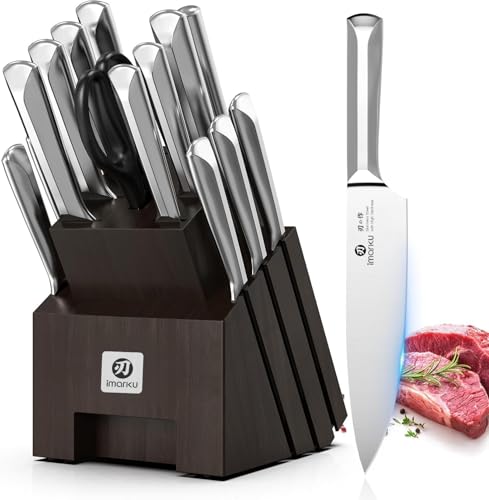
imarku 16-Piece High-Carbon Stainless Steel Knife Set
Full-tang construction
Daily heavy chopping

Family Friendly
imarku 18-Piece Japanese Santoku Knife Set with Block
Complete 18-piece setup
Large household kitchens
Taking A Closer Look At The Options
Mercer Culinary built its reputation in culinary classrooms, and that DNA shows in this six-piece Genesis set. The blades are precision-forged (a process where molten steel is shaped under heavy pressure for extra density and strength) from high-carbon German steel, a metallurgy standard that favors edge retention over corrosion resistance. Compared to the larger imarku kits coming later in this roundup, this set stays minimal on purpose, focusing on the four or five knives you actually reach for daily.
The tempered glass block looks modern and lets you see each blade at a glance. Handles are ergonomically shaped (contoured to fit the natural curve of your hand) with a non-slip grip that holds steady even when your hands are damp from rinsing produce. For anyone moving up from a flimsy starter set, the difference in balance is noticeable within the first few cuts.
The Practical Payoff
- German high-carbon steel holds a working edge through extended prep sessions
- Forged construction gives the blades a heavier, more controlled feel in hand
- Non-slip ergonomic handles stay secure with wet or oily fingers
- Compact six-piece footprint suits apartments and smaller counters
- Glass block doubles as a visual centerpiece on open shelving
Things To Consider
- Only six pieces, so specialty work like breaking down a whole chicken may need an extra purchase
- Hand-washing is generally recommended for high-carbon steel to prevent spotting over time
Who It Suits Best
Home cooks who already know their way around a chef’s knife and want professional-grade steel without paying for a 15-piece kit they will not fully use.
Where Another Pick Suits Better
Households setting up a first kitchen from scratch may find the Astercook 15-piece set a more complete starter package.
The Astercook 15-piece lands in that sweet spot for new homeowners or anyone building a kitchen from zero. You get an 8-inch chef knife, slicing knife, santoku (a Japanese-style all-purpose blade with a flat edge and a slightly shorter blade than a Western chef knife), serrated bread knife, utility, paring, and six steak knives, plus kitchen shears and a hardwood block with a built-in sharpener. Where Mercer’s set keeps things pared down, this one is designed to cover every job in a busy household.
The blades carry a black non-stick coating that helps food release cleanly while slicing. You will want to hand-wash to preserve that finish long-term, though. The integrated sharpener in the block is a nice touch for shoppers who want a low-fuss way to maintain edges between professional sharpenings.
Strong Points
- Wide variety of pieces covers almost every prep task out of the box
- Built-in sharpener removes the extra step of buying or storing a separate tool
- Black coating on blades reduces sticking during tomato and cheese slicing
- Six steak knives included for family dinner service
Worth Noting
- The non-stick coating may show wear after years of heavy daily use
- Hardwood block adds noticeable weight compared to lighter glass or plastic alternatives
Made For
First-time homeowners and newlyweds furnishing a kitchen in one shopping trip who want a complete cutlery solution rather than piecing knives together individually.
Consider Something Else When
Cooks who want a more refined forged blade experience will likely prefer the Mercer Culinary M20000 Genesis set.
This imarku set leans into a distinctly Japanese cutting philosophy. The blades are precision-forged from high-carbon stainless steel and honed to an acute 10 to 15 degree edge, noticeably sharper than the typical 20 degree Western edge. A gyutou (the Japanese equivalent of a Western chef’s knife, generally lighter and with a flatter edge profile) sits at the center, ready to handle vegetables, proteins, and herbs with minimal effort.
The hardwood block includes a built-in pull-through sharpener, which keeps that fine edge workable between deeper maintenance sessions. For cooks used to heavier German blades, the lighter Japanese-style balance takes a short adjustment period. The non-slip handle geometry helps during that transition by giving your grip a reliable reference point.
Why It Works Well
- Acute 10 to 15 degree edge slices cleanly through ripe tomatoes and herbs
- High-carbon stainless steel aims to balance sharpness and corrosion resistance
- Pull-through sharpener in the block refreshes edges in seconds
- Ergonomic non-slip handle reduces hand fatigue during long prep sessions
Trade Offs
- Thinner Japanese-style edge requires more careful cutting board use to avoid chips
- Fewer pieces than the larger 14, 15, and 18-piece kits in this roundup
Key Specs
Best Suited To
Cooks who appreciate the precise, lighter feel of Japanese cutlery and want that experience at an accessible price point.
Skip It When
Large households needing a full steak knife set and extra specialty blades will get more value from the imarku 18-Piece Japanese Santoku Knife Set.
The 14-piece imarku set threads a middle path between the bare-bones Mercer kit and the kitchen-sink 18-piece configuration. The blades are forged from AICHI steel, a Japanese-grade stainless known for respectable edge retention. The acacia wood block brings a warmer aesthetic than the more common dark hardwood or black-coated options, and it houses the same convenient built-in sharpener found on other imarku kits.
For a household that cooks four or five nights a week, the count hits a practical sweet spot. You get the essentials plus enough variety to handle bread, carving, and dinner service. Dishwasher compatibility is noted, though hand-washing remains the gentler path for any kitchen knife over time.
Practical Pluses
- AICHI steel construction aims for longer edge life than standard stainless
- Acacia wood block offers a distinctive, warmer countertop look
- Built-in sharpener simplifies routine maintenance
- Fourteen pieces cover most weekly prep without overwhelming storage
Honest Caveats
- Acacia block may need occasional conditioning to prevent drying in low-humidity kitchens
- Slightly heavier block footprint compared to compact glass designs
Perfect Match For
Families who cook often enough to need a full lineup but do not want the storage commitment of an 18-piece spread.
Reach For A Different Pick When
Style-driven shoppers who want a brighter countertop presence should look at the white imarku 15pc Japanese HC Steel Knife Set.
Most knife blocks come in dark wood or black finishes, so this all-white imarku set stands out the moment it lands on a counter. Underneath the color shift, the bones match the brand’s other kits: high-carbon stainless steel blades, a wooden block with a built-in sharpener, and a 15-piece count that includes chef, santoku, slicing, bread, boning, utility, and paring knives plus shears.
For kitchens with white quartz countertops, light tile, or open shelving, the clean finish reads more like decor than utility gear. The same hand-washing care advice applies, since the lighter block surface will also show any scuffs more readily than a darker wood would.
Noteworthy Benefits
- White block finish coordinates with bright, modern kitchen palettes
- Fifteen pieces cover a wide range of prep tasks
- Built-in sharpener integrated into the block
- High-carbon stainless steel targets durable edge retention
Points To Note
- White finish may show fingerprints and smudges faster than dark blocks
- Boning knife included, but dedicated fish or sushi work may still call for a specialty blade
Who Will Love This
Design-conscious cooks who treat the knife block as part of the kitchen’s visual story rather than a hidden tool.
Look Elsewhere When
Shoppers who want a rainbow statement piece instead of a neutral white look will likely prefer the Marco Almond 14PC Rainbow set.
The Marco Almond set makes a statement before you cut anything. Each blade carries a rainbow color coating, an iridescent finish that catches light in different hues depending on the angle. The stainless steel core beneath provides the working edge, while the coating handles the visual drama. Compared to the more traditional imarku and Mercer kits, this one is built for kitchens where the block lives on the counter and earns its presence as a design element.
The wooden block keeps the overall footprint reasonable, and the 14-piece count covers the usual prep basics. Like other coated knives in this roundup, the iridescent surface needs gentler treatment over time, since aggressive scrubbing or harsh detergents can dull the finish.
A Few Strong Suits
- Rainbow finish makes the set a real countertop showpiece
- Fourteen pieces cover most everyday cutting tasks
- Stainless steel core provides a functional working edge
Small Caveats
- Coated finish may wear unevenly with heavy dishwasher use over time
- Roughly double the visual weight of a glass or slim wood block on a small counter
- Less traditional feel may not suit classic or farmhouse kitchen aesthetics
Right Fit For
Shoppers who want their kitchen gear to double as decor and enjoy bolder, more colorful design choices.
Another Choice May Suit
Anyone who prefers a more neutral, traditional look should consider the imarku 14-Piece Knife Set with its natural acacia wood block.
This 16-piece imarku configuration leans into durability. Each blade goes through repeated forging and low-temperature quenching (a heat treatment that hardens the steel while keeping it tough), reaching a Rockwell hardness (a standardized scale measuring how hard a steel blade is, with higher numbers meaning better edge retention but more brittleness) of about 56 plus or minus 2 HRC. The full-tang construction (where the blade steel runs continuously through the entire handle) gives the knives a balanced, sturdy feel that heavier-handed cooks tend to appreciate.
The set covers a santoku-led lineup with enough pieces to handle everything from everyday chopping to dinner party carving. For households that actually use their knives hard, day in and day out, that kind of build quality tends to outlast thinner stamped-blade alternatives.
The Upside
- Full-tang build supports confident chopping and heavier prep work
- Rockwell 56 plus or minus 2 HRC targets a balance of edge life and toughness
- Sixteen pieces offer solid coverage for a busy household
Points To Keep In Mind
- Heavier blade balance may feel slow for cooks used to lighter Japanese-style knives
- Block footprint grows with the larger piece count
Key Specs
Built With In Mind
Home cooks with bigger meal prep sessions who want knives that can stand up to daily use without feeling fragile.
Where A Sibling Pick Shines
Lightweight cutting fans who prefer nimble, Japanese-style handling should consider the imarku Japanese High Carbon Stainless Steel Knife Set reviewed earlier.
The 18-piece imarku Santoku kit is the largest configuration in this roundup and aims to be a one-purchase answer for a full household. You get an 8-inch chef knife, 7-inch santoku, bread knife, slicing knife, a second 6-inch chef, utility, paring, eight serrated steak knives, an 8-inch sharpening rod, kitchen shears, and a solid wood block. For a family that runs through three meals a day, having eight steak knives alone removes a daily bottleneck.
The solid wood block anchors the set visually and adds noticeable weight, so plan for a stable counter spot. The santoku-forward lineup keeps cutting technique familiar even with the larger piece count, so no knife feels like a stranger in the drawer.
The Case For It
- Eighteen pieces cover virtually every kitchen cutting scenario in a single purchase
- Eight steak knives handle family-style dinner service comfortably
- Included sharpening rod supports maintenance between deeper sharpening sessions
- Solid wood block keeps the full set organized in one footprint
Where It May Fall Short
- Larger block footprint requires meaningful counter or shelf space
- More pieces means more individual care, especially around hand-washing routines
Whose Shelf It Belongs On
Large households or serious home cooks who want a complete, ready-to-go cutlery setup without shopping piece by piece.
Swap It Out When
Smaller kitchens with limited counter real estate will do better with the compact Mercer Culinary M20000 Genesis 6-Piece Forged set.
Picking A Knife Block Set That Actually Fits Your Kitchen
The right knife block set depends less on piece count and more on how you actually cook. Start with steel type. High-carbon stainless steel, as found in the imarku kits, offers a balance of edge retention and corrosion resistance, while German high-carbon steel, like in the Mercer Genesis, leans toward tougher, heavier blades. Each works well, but the cutting feel differs noticeably once you chop for ten minutes straight.
Next, think about weight and balance. Japanese-style blades tend to be lighter and favor a push-cut motion, while Western-style forged knives sit heavier in the hand and reward a rocking motion across the board. Your dominant grip and usual cutting style should drive this choice more than brand reputation.
Consider the block itself. Wooden blocks in darker hardwoods or natural acacia hide everyday wear but need occasional conditioning in dry climates. Glass blocks read modern but show smudges faster. White or coated blocks brighten a counter but can reveal scuffs over time. The block lives on your counter daily, so its look matters as much as the blades inside.
Knife Steel And Edge Geometry
High-carbon stainless steel aims to hold an edge longer than plain stainless, though it can still stain if left wet. Edge angle matters too. The acute 10 to 15 degree edge on the imarku Japanese set slices cleanly but requires a gentler cutting board to avoid chips. Standard 20 degree edges are more forgiving on wood and composite boards.
Block Materials And Counter Footprint
A 6-piece block fits almost anywhere, while 16 to 18-piece sets need a stable, dedicated spot. Wooden blocks add warmth but can warp near dishwashers or sinks. Glass blocks are easy to wipe clean but slide on smooth counters without a liner.
Piece Count Versus Daily Use
More knives in a set does not automatically mean more useful. Most home cooks regularly reach for a chef’s knife, a paring knife, and a serrated bread knife. Specialty pieces like boning or carving knives earn their place during specific meals. A 14 or 15-piece set usually hits the practical sweet spot for most households.
Key Considerations Across These Picks
Where Shoppers Go Wrong
Counting pieces often distracts from blade quality. A 15-piece set with thin stamped blades can underperform a well-forged 6-piece kit, because stamped blades are cut from a single sheet of steel rather than forged, making them lighter and less durable in heavy use. Skip the assumption that bigger equals better and look at how the knives actually feel in hand.
Another common slip is ignoring maintenance. Sets with built-in sharpeners help, but hand-washing and drying immediately will extend the life of nearly any blade, coated or not. Dishwasher cycles expose knives to harsh detergents and jostling against other items, both of which dull edges and damage handles over time.
Where The Extra Money Goes
Stepping up to a higher-tier set typically buys better steel treatment, stronger tang construction, and more refined handle ergonomics. You may also see upgraded block materials like tempered glass or solid hardwood. The jump in performance shows up most clearly after a year of regular use, when premium blades still hold an edge while cheaper ones need constant touch-ups.
Frequently Asked Questions
How many knives does a typical household really need?
Most home cooks use a chef’s knife, a paring knife, and a serrated bread knife for about 90 percent of their prep work. Adding a santoku, slicing knife, and a set of steak knives covers most entertaining and family dinners without overwhelming the block.
What is the difference between forged and stamped knives?
Forged knives are made from a single piece of heated steel that is shaped under pressure, producing a denser, heavier blade with better balance. Stamped blades are cut from a flat sheet of steel, making them lighter and usually less expensive. Forged blades tend to hold an edge longer but cost more.
Do built-in sharpeners actually work?
The pull-through sharpeners built into many imarku blocks do a reasonable job of refreshing edges between deeper maintenance sessions. They work best for routine touch-ups rather than repairing badly damaged blades, so most cooks still want a whetstone or professional sharpening for periodic deep work.
How should knife blocks be cleaned?
Wooden blocks benefit from an occasional scrub with a mild soap solution and a soft brush, followed by thorough drying on their side. Avoid soaking the block or running it through a dishwasher. Glass and composite blocks can usually be wiped down with standard kitchen cleaners.
Are coated blades harder to maintain?
Coated blades, like the black finish on the Astercook or the rainbow coating on the Marco Almond, need gentler care to preserve the finish. Hand-washing, soft sponges, and avoiding abrasive cleaners will keep the coating looking even for years.
The Takeaway
Affordable knife block sets cover a wide spectrum, from compact six-piece forged kits to full 18-piece family configurations. The honest answer is that the right pick depends on your counter space, cooking volume, and the feel you prefer in your hand. Focus on steel quality, weight, and how often you will actually reach for specialty pieces, and you will end up with a set that earns its spot on the counter for years.
