
Book Appointment Now

8 Best Affordable Chef Knives for 2026: Real Cuts, Real Kitchens

You don’t need a four-figure blade to cook well, and you don’t need a flimsy bargain-bin knife either. Plenty of capable chefs knives sit in the affordable range, the kind that hold an edge, feel balanced in the hand, and don’t punish you for a rough weeknight prep. This lineup sorts through eight solid options, from a workhorse Western-style blade to sleek Japanese-inspired profiles and full block sets, so you can match the right tool to the way you actually cook.
A Quick View Of The Lineup
PickWhy We Picked ItBest ForAction

Editor’s Choice
Tramontina Pro Series 8-Inch Chef’s Knife
Reliable Western-style workhorse
Everyday home cooking

Premium Pick
Global 7″ Asian Chef’s Knife with Hollow Edge
Sleek all-steel balance
Sushi and veg prep

Design Standout
Sunnecko 8″ Japanese Damascus Chef Knife VG10
Layered VG10 Damascus build
Style-conscious home cooks

Value Pick
Sunnecko 8″ Chef Knife with Pakkawood Handle
Sharp edge, included sheath
Beginner knife shoppers

Specialty Choice
Sunnecko Nakiri 7″ Vegetable Chef Knife
Flat-edge veggie specialist
Big salad and stir-fry prep
Heavy Duty Pick
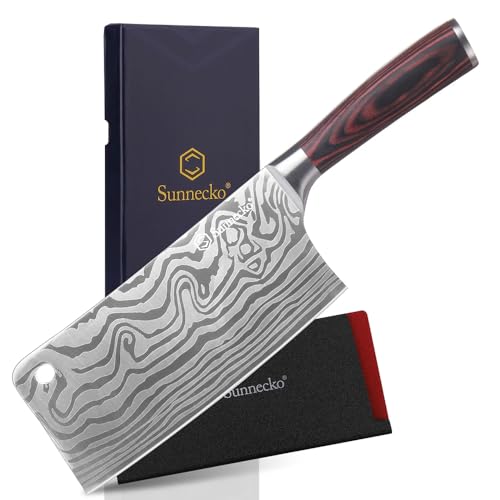
Sunnecko 7″ Cleaver Knife, Meat & Vegetable
Tall blade for power cuts
Bone-in and squash work

Feature Rich
Sunnecko 7-Piece Damascus Knife Set with Block
Full block, VG10 core
Outfitting a new kitchen
Family Friendly
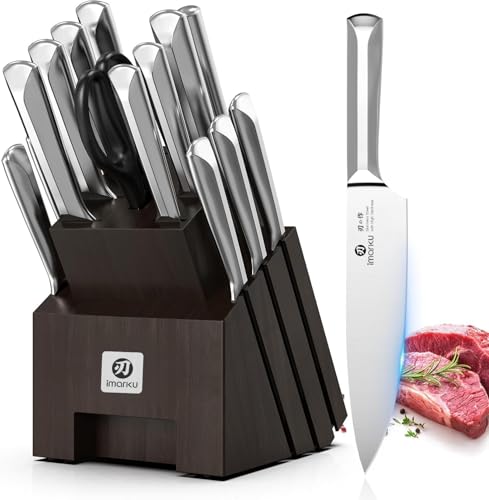
imarku 16-Piece High-Carbon Stainless Knife Set
Wide set for full coverage
Households wanting everything
A Breakdown Of The Leading Choices
The Tramontina Pro Series 8-Inch Chef’s Knife is the kind of blade that disappears into your routine. It uses a forged high-carbon stainless steel construction with a full tang, meaning the metal runs the entire length of the handle for strength and balance. The bolster (the thick collar where blade meets handle) adds heft and gives your fingers a natural guard during busy prep.
For someone cooking weeknight dinners in a real kitchen, this knife handles onions, chicken, butternut squash, and bunches of herbs without fuss. It’s a Western-style profile, so the curve supports a familiar rocking motion. Coming in lighter than many Japanese-style options, it tends to feel approachable for first-time owners.
Real-World Strengths
- Forged high-carbon stainless steel resists staining and stands up to daily slicing
- Full-tang build with a bolstered handle delivers a steady, secure grip during long prep sessions
- 8-inch length is the versatile sweet spot for vegetables, proteins, and bread alike
- Taper-ground edge is easy to maintain on a basic whetstone or honing rod
- Trusted entry price point for a pro-style knife without the boutique markup
Things To Consider
- Heavier than thinner Japanese-style blades, which can tire out smaller hands faster
- Western grind is less acute than Asian-style edges, so paper-thin tomato slices take more care
- Hand washing and prompt drying are widely recommended to keep the finish looking fresh
Feature Snapshot
Who It Suits Best
Newer home cooks and busy households who want one reliable knife to cover nearly every prep job.
Look Elsewhere When
The Global 7″ Asian Chef’s Knife is a better match if you prefer a lighter, thinner Japanese-style profile with a seamless handle.
Global’s 7-inch Asian Chef’s Knife carries that signature all-steel silhouette, with a single piece of stainless steel running from blade tip to handle. The hollow edge (a blade with small scalloped pockets along the side) creates air pockets that help thin slices of potato, cucumber, or fish fall away instead of sticking. The shape is somewhere between a santoku and a light gyuto (a Japanese all-purpose chef’s knife), giving you flat-edge chopping plus a slight curve.
For apartment dwellers with limited drawer space, the slim form factor slips into any knife block or magnetic strip. The balance point sits forward near the bolster, so the blade does the work, which can feel magical on precise cuts. Compared to the heavier Tramontina that opened this list, this one rewards a lighter pinch grip.
Notable Gains
- Hollow edge reduces drag, helping delicate slices release cleanly from the blade
- All-steel seamless build is hygienic at the handle joint and easy to wipe down
- 7-inch length and lighter weight suit smaller hands and quick, controlled cuts
- Plenty of knuckle clearance keeps fingers safe against the cutting board
Worth Noting
- All-metal handle can feel slick when wet, so a dry hand is helpful during long sessions
- Pricier than the budget picks on this list, even before considering a whetstone routine
- Seamless handles show fingerprints and water spots, so frequent wiping is part of the deal
Best Suited To
Cooks who do a lot of vegetable, fish, and herb work and appreciate a precise, lightweight blade with a slim profile.
Skip It When
The Tramontina Pro Series 8-Inch Chef’s Knife is a smarter pick if you want a traditional Western feel at a lower cost.
The Sunnecko 8-inch Damascus Chef’s Knife is built around a VG10 steel core (a high-carbon stainless steel known for sharp edges and good corrosion resistance) wrapped in 67 layers of folded Damascus steel, which produces that rippled, water-flow look across the blade. The handle is contoured for a Western pinch grip, and the edge is honed to a notably thin angle.
For someone who actually likes their tools to look the part, this knife doubles as a small kitchen display piece. The harder VG10 core holds a fine edge longer than many softer stainless options, so it stays keen through extended prep. Compared to the all-metal Global reviewed above, this Sunnecko carries a more traditional handle shape and a bit more weight toward the heel.
Useful Strengths
- VG10 core steel holds a sharp, fine edge through heavy prep sessions
- 67-layer Damascus exterior adds corrosion resistance and visual depth
- Razor-thin geometry around 10 to 12 degrees makes clean, low-effort cuts on tomatoes and herbs
- Contoured handle supports a confident pinch grip for detail work
Trade Offs
- Harder steel can chip on bones, frozen food, or hard squash if you twist the blade
- Damascus patterns need a quick wipe after use to keep the finish looking crisp
- Thin geometry rewards a careful cutting board (wood or soft plastic) over glass
Feature Snapshot
Right Fit For
Style-conscious home cooks who want a head-turning blade and mostly prep vegetables, fish, and boneless proteins.
Not Your Match When
The Sunnecko 7″ Cleaver Knife is a better fit if you regularly break down bone-in chicken or tough squash where a thicker spine helps.
Sunnecko’s 8-inch chef knife leans into a friendly, ready-to-use package. The blade is forged from high-carbon stainless steel, the edge is hand-sharpened to roughly 12 to 15 degrees per side, and the handle is made from pakkawood (a resin-impregnated hardwood that’s stable and water-resistant), with a matching sheath included. That sheath alone saves you from digging through a drawer for a blade guard.
For first-time knife owners, this setup removes two early questions: how to store it, and what to do before the first cut. The geometry is a little less aggressive than the Damascus Sunnecko above, which makes the edge more forgiving during learning curves. Coming in lighter than the heavier Tramontina, it suits a smaller grip nicely.
The Upside
- 12 to 15 degree edge slices cleanly through tomatoes, peppers, and boneless proteins
- Included sheath protects the edge during drawer storage and travel
- Pakkawood handle stays comfortable in long prep and resists moisture well
- Hand-honed factory edge means you can cook with it straight out of the box
Honest Caveats
- Edge retention sits below the harder VG10 Sunnecko, so routine honing is part of the deal
- Wooden-style handle shouldn’t sit in standing water, even with the resin treatment
Feature Snapshot
Made For
Newer cooks, students, or anyone setting up a first kitchen who wants a complete, ready-to-use package without hunting for extra accessories.
Consider Something Else When
The imarku 16-Piece Knife Set is a stronger match if you’d rather replace a drawer full of mismatched tools in one go.
A nakiri is a Japanese-style knife with a flat, squared-off edge designed for straight-down chopping, and this 7-inch Sunnecko version leans into that specialty. The flat edge meets the board across the whole blade, so greens, herbs, and uniform vegetable dice happen in a clean, predictable motion. The double-bevel edge is hand-polished to a 12-degree angle, which keeps slices crisp without crushing delicate leaves.
For households running through big salads, weekly stir-fry prep, or tray after tray of roasted veggies, the straight-edge geometry speeds up repetitive chopping. The flat profile also makes the knife a confident second blade next to a curved Western chef’s knife, picking up the slack where rocking motions don’t shine.
The Case For It
- Flat edge produces clean, even vegetable cuts with a single downward stroke
- Thin 12-degree geometry keeps herbs and greens from bruising
- Compact 7-inch length gives control in tighter cutting board setups
- Works as a versatile second knife next to a main chef’s knife
Points To Keep In Mind
- Flat edge isn’t ideal for rocking cuts, so a curved chef’s knife still earns its spot
- Thin geometry wants a soft cutting board to keep the edge from chipping
Feature Snapshot
Who Should Grab It
Vegetable-forward cooks who run big weekly prep days and want a tool tuned for straight, clean cuts.
A Better Fit Elsewhere
The Tramontina Pro Series 8-Inch Chef’s Knife is the more flexible pick if you want one knife to handle every prep task from herbs to chicken.
The Sunnecko 7-inch Cleaver Knife is the brute of the lineup, with a tall, rectangular blade and a thicker spine that delivers real downward force. It’s forged from high-carbon steel for edge retention and corrosion resistance, and the broad blade works double duty for slicing boneless proteins and chopping through tough squash or cabbage halves.
For cooks who break down whole chickens, prep large trays of roasted vegetables, or just like the confidence of a heavier blade, this one fills a different gap than the lighter Sunnecko nakiri above. The tall profile also keeps knuckles well clear of the board during push cuts. For most people, it’s a strong second knife rather than the only one.
What Makes Sense
- Thick spine and tall blade deliver power cuts through squash, melon, and bone-in proteins
- High-carbon steel core holds a working edge through heavy prep
- Flat broad profile doubles as a bench scraper for transferring chopped food
- Generous knuckle clearance keeps fingers safe during push cuts
Less-Strong Areas
- Heft and tall blade take getting used to if you’re coming from a slim Japanese profile
- Not the right tool for delicate, detail-oriented herb work
Feature Snapshot
Built With In Mind
Home cooks tackling bone-in proteins, big vegetables, and hearty one-pan meals who want a heavy, confident chopper.
Reach For A Different Pick When
The Sunnecko 8″ Japanese Damascus Chef Knife is a better fit if your work leans toward fish, herbs, and fine slices.
Outfitting a new kitchen from scratch is a lot easier when the block, the chef’s knife, the paring knife, the utility blade, and the slicer all show up in one shipment. Sunnecko’s 7-piece set centers on a VG10 core wrapped in Damascus layers, with full-tang construction and a sculpted wood block that holds the blades at ready angles. The pieces cover the jobs most households actually do: chopping, trimming, slicing roast, and breaking down smaller produce.
For someone moving into a first apartment or replacing a tired mismatched collection, this set covers the basics without forcing a dozen individual buying decisions. The wood block doubles as countertop storage, keeping blades off damp surfaces. Compared to the single-blade Sunnecko Damascus reviewed earlier, the set trades some knife specialization for everyday completeness.
What Earns Its Place
- VG10 core steel across the set keeps edge geometry consistent piece to piece
- Included wood block provides organized countertop storage out of the box
- Full-tang construction adds strength and balance across every blade
- Covers the main prep jobs a household needs without extra purchases
Points To Note
- Set logic means some specialty blades (bread, boning) still need a separate purchase
- Wood block takes up dedicated counter space in smaller kitchens
The Right Fit
New homeowners, newlyweds, or anyone replacing a mismatched drawer full of knives in a single, organized purchase.
Swap It Out When
The Tramontina Pro Series 8-Inch Chef’s Knife is the simpler choice if you’d rather start with one excellent knife and add pieces over time.
The imarku 16-piece set aims at the “replace everything at once” household, with full-tang construction and a Rockwell hardness around 56 HRC (a hardness scale where higher numbers mean the steel resists wear and holds an edge longer). The set includes a santoku-style blade (a shorter, flatter Japanese-inspired chef’s knife), a chef’s knife, a bread knife, utility and paring blades, kitchen shears, a block, and the small extras that fill in the gaps.
For busy family kitchens, that breadth means you’re not stopping mid-recipe to wash the one blade you actually need. The ergonomic anti-slip handles help during rushed weeknight prep, and the included shears handle the package-opening, herb-snipping, and chicken-trimming jobs a chef’s knife shouldn’t. This is the broadest pick on the list, trading specialization for coverage.
The Helpful Details
- 16-piece coverage replaces drawer clutter with one organized block
- Anti-slip handles stay secure during fast, wet prep sessions
- Full-tang build with a hardness around 56 HRC balances edge life and ease of sharpening
- Kitchen shears included, which most knife blocks skip
Details To Watch
- Larger sets take dedicated counter space and a longer initial learning curve for which blade does what
- Edge retention on mid-tier stainless will need regular honing to stay sharp
Whose Shelf It Belongs On
Families and shared kitchens that want one complete setup covering everything from sandwich prep to dinner-party slicing.
Where A Sibling Pick Shines
The Sunnecko 7-Piece Damascus Knife Set is the better fit if you want a smaller, more curated block with higher-end VG10 core steel.
Picking The Right Affordable Chef’s Knife For Your Kitchen
A chef’s knife is the workhorse you’ll reach for almost every time you cook, so the “right” one depends on the way you actually move in the kitchen. Blade steel, edge angle, handle shape, and weight all change how a knife feels and how it holds up over time. Match the knife to your habits, not the marketing.
Blade Steel And Edge Geometry
High-carbon stainless steel is the everyday standard, balancing corrosion resistance with edge life. Harder steels like VG10 hold a keener edge longer but can chip on bones or frozen food. Softer stainless forgives more abuse and sharpens easily on a basic rod.
Edge angle matters too. Western blades typically sit around 15 to 20 degrees per side, which stays sturdy under heavy work. Japanese-style profiles drop to 10 to 15 degrees, slicing thinner but asking for a softer cutting board and a gentler hand.
Handle Comfort And Weight
A knife that’s uncomfortable after ten minutes won’t earn its place. Western-style handles with a bolster add heft and a guard for the fingers. All-steel seamless handles, like the Global, look clean and feel light but can get slick. Wood or pakkawood handles stay warm and grippy but want a quick dry after washing.
Length, Profile, And Specialty Shapes
The 8-inch chef’s knife is the versatile sweet spot for most hands. Shorter 7-inch profiles give more control on small boards. Specialty shapes like the nakiri (flat edge for vegetables) or the cleaver (tall, heavy blade for power cuts) earn their keep as a second knife once your main blade is sorted.
Maintenance And Storage Reality
A good knife is only as good as the care behind it. Hand washing and immediate drying keep finishes looking fresh, and a quick pass on a honing rod before cooking resets the edge in seconds. Storage matters as well: a wood block, magnetic strip, or included sheath protects the edge better than a crowded drawer. If weekly sharpening on a whetstone feels intimidating, lean toward a knife that’s factory-sharpened and easy to refresh with a pull-through sharpener.
Key Considerations Across These Picks
Common Shopping Slip Ups
The most common mistake is buying a knife that’s too long or too heavy for the hand actually using it. A blade that looks impressive on a product page can feel unwieldy in a small kitchen. Another trap is chasing thin geometry without a compatible cutting board, since glass or stone will chip even the best steel. Finally, ignoring storage leads to dull edges fast, so factor in a block, magnetic strip, or sheath before the first cut.
What The Higher Tier Buys
Stepping up in price usually means harder steel, better fit and finish, and a more refined handle shape. Premium picks hold a keener edge longer, balance more carefully in the hand, and arrive with tighter quality control. The upgrade is worth it once you cook often enough to notice the difference, but a mid-tier knife maintained well will outperform a neglected premium blade every time.
Frequently Asked Questions
What size chef’s knife should most home cooks start with?
An 8-inch chef’s knife covers the widest range of prep jobs, from breaking down a chicken to slicing a loaf of bread. Shorter 7-inch profiles work well for smaller hands or tight cutting boards, while longer blades suit cooks who regularly tackle large produce.
How often should a chef’s knife be sharpened?
Honing before most cooking sessions keeps the edge aligned, while actual sharpening on a whetstone or pull-through sharpener is typically needed every few months. Harder steels hold an edge longer, but every knife eventually needs a refresh.
Is a Japanese-style knife harder to maintain than a Western one?
Thinner Japanese-style edges hold keener cuts but chip more easily on bones, frozen food, or hard cutting boards. A simple routine of hand washing, drying, and honing keeps them happy, but they reward more careful handling than a sturdy Western blade.
Can one chef’s knife really replace most specialty knives?
For most home cooks, a single versatile 8-inch blade handles around 90 percent of prep. Adding a paring knife for detail work and a bread knife for crusty loaves covers the rest. Specialty shapes like a nakiri or cleaver become useful second knives once your basics are set.
Are knife block sets a good value for a new kitchen?
Sets offer convenience and consistent storage, especially when outfitting a kitchen from scratch. The trade-off is that some included blades may go unused, and quality can vary piece to piece. A well-chosen single knife plus a small set of supporting blades is often a stronger long-term path.
Final Verdict
A good chef’s knife changes the feel of cooking, and “affordable” no longer means compromise. Pick the profile that matches your grip, the steel that matches your habits, and the storage that matches your kitchen. Whichever option above fits that description, you’ll spend less time wrestling your tools and more time enjoying the food.
