
Book Appointment Now

8 Best Affordable Chef Knives for 2026

A good chef’s knife changes the way a kitchen feels. The right blade makes quick work of a Sunday roast, glides through a mountain of vegetables, and turns weeknight prep into something a little less tedious. The wrong one rattles, drags, and dulls after a few uses. Affordable doesn’t have to mean flimsy, though, and this lineup focuses on blades that earn their place on a real countertop.
The picks below balance steel, weight, and geometry across Western and Japanese styles. You’ll find entry-level workhorses, a few step-up options, and some purpose-built shapes for serious veg prep. Each one is broken down by feel, ownership realities, and who it’s actually for.
A Closer Look At The Lineup
PickWhy We Picked ItBest ForAction

Everyday Favorite
Tramontina Pro Series 8-Inch Forged Chef’s Knife
Forged full-tang workhorse
Daily home cooking

Design Standout
Global 7″ Asian Chef’s Knife Hollow Edge
Hollow-edge one-piece build
Sleek, precise slicing

Premium Pick
Sunnecko 8-Inch Japanese Damascus VG10 Chef Knife
Layered Damascus with VG10 core
Step-up steel performance

Value Pick
Sunnecko 8-Inch Japanese Chef Knife with Sheath
Pakkawood handle, includes sheath

Beginner Friendly
imarku 8-Inch Japanese Chef Knife
Lightweight, easy to maneuver
First-time chef’s knife owners
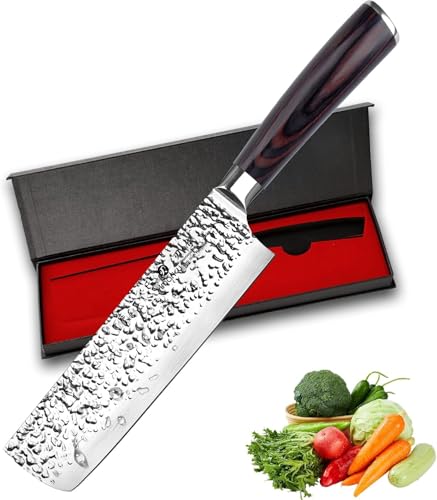
Vegetable Prep Pick
imarku 7-Inch Nakiri Japanese Knife
Flat-edge nakiri for slicing
Vegetable-heavy home cooking
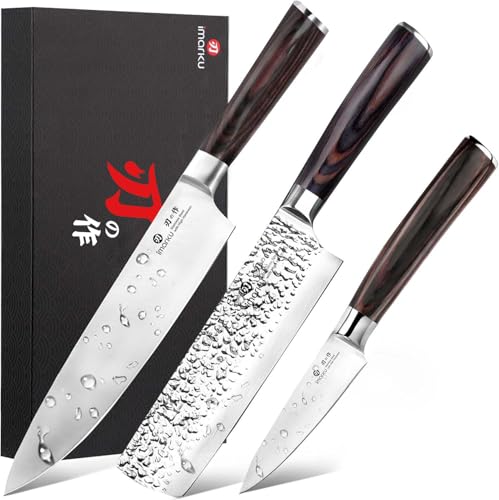
Starter Set Pick
imarku 3-Piece Japanese HC Stainless Steel Knife Set
Three core blades in one set
Outfitting a first kitchen

Heavy Duty Pick
Sunnecko 7-Inch Nakiri Chef Knife
Wide blade, all-purpose prep
Big-batch chopping sessions
The Tramontina Pro Series sits at the top of many entry-level lists for a reason. Forged from a single piece of stain-free high-carbon steel, it carries real heft through a full-tang build (meaning the steel runs continuously from blade to handle), which gives it that reassuring weight home cooks expect from a Western-style chef’s knife. The blade tapers to a fine edge, and the bolster helps balance the knife in the hand during long prep sessions.
For most weeknight cooking, this is a quiet workhorse. It breaks down a chicken, handles a pile of carrots, and doesn’t feel precious. Compared to the slimmer, harder Japanese-style picks further down the list, the Tramontina trades a little finesse for a more forgiving feel and easier sharpening on a basic whetstone.
What It Does Well
- Full-tang forged construction adds real durability for daily prep.
- Stain-free high-carbon steel resists rust and holds an edge through normal use.
- Traditional bolster and weighted balance suit a Western cutting style.
- Taper-ground edge (thin profile behind the cutting edge for less drag) supports cleaner slicing than stamped blades in the same bracket.
- Widely available and easy to replace if a housemate borrows it permanently.
Trade Offs
- Thicker at the spine than Japanese-style blades, so delicate herb work takes more care.
- Hand-washing and prompt drying are commonly recommended to keep the handle and edge in good shape.
Whose Counter It Belongs On
Home cooks who want one dependable 8-inch chef’s knife for general prep and don’t want to overthink maintenance.
Where Another Pick Suits Better
Vegetable-heavy cooks prepping large trays of produce may prefer the flat edge of the imarku 7-Inch Nakiri Japanese Knife instead.
Global’s 7-inch Asian Chef’s Knife leans into the brand’s signature look: a one-piece molded handle, a clean dimpled edge, and a forward balance that feels more like an extension of your hand than a tool. The hollow-ground blade (grinding small oval pockets into the sides of the blade) creates air pockets between steel and food, so potato slices and boneless cuts release cleanly rather than sticking to the side.
The 7-inch length sits comfortably between the Tramontina’s full 8 inches and the shorter nakiri shapes later in the list. You get good knuckle clearance on a standard board, and the thinner profile handles sashimi-grade work and detail slicing better than the chunkier forged Western knives. It’s a refined pick for cooks who like the feel of a Japanese-style blade without going full traditional with a wooden handle.
What Helps Most
- Hollow-ground edge helps starchy vegetables release cleanly from the blade.
- Seamless one-piece construction is easy to wipe down and sanitize around the handle.
- Thinner profile gives more precision for shallots, fish, and herbs.
- Balanced forward weighting suits a pinch-grip slicing style.
Points To Note
- The polished steel shows water spots and fingerprints, so wiping after each use is part of the routine.
- The thin, hard edge takes more care on a whetstone than softer Western blades.
- The stainless handle can feel slick when hands are wet or oily.
Feature Snapshot
Best Suited To
Cooks who want a sleek, precision-focused blade for vegetables, fish, and detail prep rather than heavy bone-in work.
Swap It Out When
You need a longer blade or more weight for big protein jobs; the Tramontina Pro Series 8-Inch Forged Chef’s Knife handles those better.
The Sunnecko Damascus knife steps into a more ambitious corner of the affordable chef knife category. The 67-layer construction surrounds a VG10 steel core (a hard, stain-resistant Japanese stainless often used in mid- to high-end cutlery), producing a blade that holds a sharp edge longer than softer stainless picks and earns its dramatic ripple pattern in the process. The hand-finished edge sits in a 10 to 12 degree range per side, close to what you’d find on a traditional Japanese yanagiba.
For cooks who want an upgrade without crossing into full custom territory, this offers a lot of blade for the bracket. The thin geometry makes paper-thin tomato slices and clean onion cuts feel almost effortless. The honest read is that it rewards careful handling. A whetstone and a wooden board are wise companions, and the harder steel is less forgiving of hard knocks against bone or stone.
A Few Strong Suits
- VG10 core with 67 Damascus layers balances hardness and corrosion resistance.
- Acute edge angle supports clean pull cuts through tomatoes and boneless proteins.
- Pattern-welded finish gives the blade a distinct, gift-worthy look.
- Longer edge retention than softer stainless options in this list.
Honest Caveats
- Harder steel needs careful sharpening technique on a whetstone rather than a quick hone.
- Thin geometry can chip if it meets bone, frozen food, or hard cutting surfaces.
- Patterned finish is more visual than functional and varies blade to blade.
Made For
Cooks ready to learn basic whetstone care and willing to use a softer board to get the most out of harder Japanese steel.
Reach For A Different Pick When
You’d rather skip the stone and sharpen casually; the imarku 8-Inch Japanese Chef Knife offers a more forgiving entry point.
Sunnecko’s 8-inch Japanese-style chef knife takes a different path from the Damascus pick. Built from high-carbon stainless steel with a 12 to 15 degree edge, it focuses on getting a sharp, accessible blade into a kitchen without much fuss. The pakkawood handle (resin-impregnated wood that resists moisture better than raw hardwood) gives it a traditional look while staying more stable in humid conditions than untreated wood.
The included sheath is a thoughtful touch for a knife in this bracket. You can toss it in a drawer without worrying about the edge catching other tools, or pack it for a cookout without a separate knife roll. The trade-off is that the blade steel and finish aren’t quite at the level of the Damascus option, so you may find yourself honing more often during heavy prep weeks.
Where It Delivers
- Acute edge geometry glides through tomatoes, peppers, and boneless proteins.
- Pakkawood handle offers a warm, traditional grip that resists swelling.
- Sheath adds safe storage and makes it travel-friendly for outdoor cooking.
- Sits well under a tight budget without giving up a proper 8-inch profile.
A Few Limitations
- High-carbon stainless still benefits from prompt hand-washing and drying.
- Edge retention won’t match the harder VG10 core in the Damascus Sunnecko.
- Sheath fits the blade snugly, so cleaning inside the sheath takes a little extra care.
Quick Facts
Right Fit For
Budget-conscious cooks who want a Japanese-style profile, an 8-inch reach, and a safe way to store it between uses.
Where Another Pick Suits Better
Cooks chasing the longest edge life should consider the Sunnecko 8-Inch Japanese Damascus VG10 Chef Knife, though the budget stretches a step further.
The imarku 8-inch gyutou (the Japanese equivalent of a Western chef’s knife, with a flatter edge and lighter feel) is a friendly entry point for someone buying their first serious chef’s knife. The high-carbon stainless blade stays relatively thin, the handle is light, and the balance favors control over brute force. If you’ve been making do with a mismatched set from a big box store, this is a clear step up without a steep learning curve.
Day to day, it handles a Tuesday stir-fry or a holiday herb chop with equal ease. The lighter feel also makes it approachable for cooks with smaller hands who find heavier Western blades tiring. It’s not trying to be a Damascus showpiece; it’s a practical, sharp knife that just works.
Benefits That Matter
- Lightweight build reduces hand fatigue during longer prep sessions.
- Thin, sharp factory edge handles produce, herbs, and boneless meat cleanly.
- Often sold at a friendly entry price, making it a low-risk first upgrade.
- Stainless construction forgives the occasional missed hand-dry.
Some Limits To Know
- Edge retention is modest compared to harder VG10 or Damascus blades.
- Handle design is straightforward, so cooks with larger hands may want to test the grip first.
- Not the right tool for thick squash or dense winter squash in one pass.
Perfect Match For
First-time chef’s knife owners, apartment dwellers, and anyone moving up from a basic block set.
Look Elsewhere When
You want a complete small-kitchen bundle; the imarku 3-Piece Japanese HC Stainless Steel Knife Set covers more ground in one go.
A nakiri is a different beast from a standard chef’s knife. The flat, squared-off edge is built for straight-down chopping rather than rocking, which is exactly how most home cooks already cut onions, carrots, and herbs on a board. The imarku 7-inch nakiri carries a 15-degree edge and a tall blade that gives knuckle clearance on a standard board without forcing you to hold the food at an awkward angle.
The granton edge (the small scalloped pockets along the side) helps push starchy vegetables like potatoes and zucchini off the blade mid-cut. It’s the kind of detail you don’t notice until you’ve wrestled a wet cucumber onto a smooth steel surface, then suddenly realized how much less cleanup there is. For a kitchen that runs on weeknight vegetable trays or weekend mise en place, it earns its slot on the counter.
Positive Points
- Flat edge suits push-cut chopping for uniform vegetable slices.
- Tall blade clears knuckles on a regular cutting board.
- Granton edge reduces sticking on starchy produce.
- Lightweight enough for one-handed transfer from board to pan.
Practical Considerations
- Not built for rocking cuts or curved protein work, so it pairs with a chef’s knife rather than replaces one.
- Thin geometry around the tip calls for a softer board to avoid chipping.
Feature Card
Who Should Grab It
Home cooks who prep a lot of vegetables and want a knife that matches how they already cut.
A Better Fit Elsewhere
Anyone needing a true all-purpose workhorse should start with the Tramontina Pro Series 8-Inch Forged Chef’s Knife instead.
Sets like this one exist because outfitting a first kitchen usually means buying three or four knives anyway. imarku’s 3-piece set pairs an 8-inch chef’s knife with two smaller helpers in matching high-carbon stainless steel, all with pakkawood handles. The pieces share a 15-degree edge, so they sharpen the same way and feel consistent in the hand from one task to the next.
For a starter apartment, a new homeowner, or a shared kitchen where everyone grabs whatever’s closest, the value of a matched set is hard to overstate. You get real blades, not the soft stamped steel that comes in budget blocks. The honest read is that the supporting pieces aren’t going to replace specialty knives forever, but they cover the daily work for years before you outgrow them.
Features That Help
- Three matched blades cover chopping, slicing, and detail work in one purchase.
- High-carbon stainless steel stays sharp longer than soft stamped alternatives.
- Pakkawood handles match across pieces for a consistent grip and look.
- Often priced below the cost of buying three knives individually.
Possible Compromises
- Includes only the essentials, so bread and boning jobs will still need dedicated tools later.
- Matching handles mean a single style decision rather than per-knife customization.
- Hand-washing all three takes a little more commitment than a single chef’s knife.
Built With In Mind
New homeowners, college grads, and anyone setting up a kitchen from a near-empty drawer.
Not Your Match When
You already own a quality chef’s knife and only need a specialty shape; the Sunnecko 7-Inch Nakiri Chef Knife is a more focused add-on.
Sunnecko’s 7-inch nakiri splits the difference between the lighter imarku 7-inch model and a heavier cleaver-style build. The wide blade gives you serious surface area to scoop up a mountain of chopped vegetables and slide them straight into a wok, while the 12-degree edge keeps the cuts clean. It’s pitched as an all-purpose prep knife, and in a vegetable-forward kitchen it lives up to that label.
The shape also makes quick work of boneless proteins when you want clean slices for a stir-fry. For cooks running big Sunday meal preps, the width is a real time-saver because transfers happen in one or two passes instead of three or four. The trade-off shows up in tighter drawers: the tall blade needs more vertical space than a slimmer gyutou.
Useful Touches
- Wide blade profile scoops chopped produce in fewer transfers.
- Acute 12-degree edge supports clean push cuts through dense vegetables.
- Hand-polished finish resists sticking during longer prep sessions.
- Functions as an all-purpose prep knife for vegetable and boneless protein work.
Where It Is Less Suited
- Taller blade needs more drawer or block space than standard chef’s knives.
- Harder edge geometry means a softer board is the smart pairing.
- Not designed for breaking down bone-in proteins.
At A Glance
The Right Fit
Cooks handling big meal prep, large trays of vegetables, or stir-fry sessions where scooping speed matters.
Where A Sibling Pick Shines
For a lighter nakiri that’s easier on smaller hands, the imarku 7-Inch Nakiri Japanese Knife is a friendlier alternative.
Choosing The Right Blade For Your Kitchen
Steel type matters more than most shoppers expect. High-carbon stainless is the most common affordable chef knife material, and for good reason: it takes a sharp edge, resists rust in normal use, and forgives the occasional missed hand-dry. Harder steels, like the VG10 core in the Damascus Sunnecko, hold an edge longer but demand more careful handling and sharpening technique.
Blade shape changes how the knife actually works. A Western-style chef’s knife rocks on a board and handles most proteins. A Japanese gyutou slices cleaner but takes gentler handling. A nakiri is purpose-built for straight-down vegetable work and excels in kitchens that lean produce-heavy.
Handle feel is worth considering in person when possible. Lightweight handles suit smaller hands and longer prep sessions, while heavier full-tang builds (like the Tramontina) feel sturdier and balance closer to the bolster. Care routine ties to all of this. Most knives in this list benefit from hand-washing, prompt drying, and a soft wood or plastic board rather than glass or stone.
Key Considerations Across These Picks
Where Shoppers Go Wrong
A common slip is choosing a knife purely on edge angle, ignoring the handle. A 12-degree edge on a slippery or poorly shaped grip quickly becomes a chore. Another pitfall is buying the longest blade available, when a 7-inch profile often feels nimbler on a standard home cutting board and clears knuckles more reliably for shorter cooks. Skipping board quality is the silent killer: even the best blade in this list will struggle on a glass or stone surface.
When Paying More Pays Off
Stepping up to a VG10-core or layered Damascus blade buys longer edge retention and a thinner geometry that holds its sharpness through heavier prep weeks. The upgrade makes sense for cooks who already maintain their tools, have a soft board in the rotation, and feel the frustration of a knife dulling mid-recipe. For someone still building knife skills, the value tier picks handle the same tasks with slightly more frequent touch-ups and far less commitment.
