
Book Appointment Now

8 Best Budget Chef Knives for 2026

A good chef’s knife quietly changes how you cook, and you don’t need to spend a fortune to get one. The trick is matching blade length, handle feel, and steel type to the way you actually prep food, not chasing a name on the side of the blade. This roundup sorts eight well-regarded options into clear use cases so you can find the right fit the first time.
How The Shortlist Stacks Up
PickWhy We Picked ItBest ForAction

Editor’s Choice
ZWILLING Four Star 6-inch Chef’s Knife
Time-tested German build
Daily home cooks
Top Pick
Victorinox Fibrox 6 Inch Chef’s Knife
Slim, precise 6-inch profile
Compact kitchens
Premium Pick
WÜSTHOF Classic 8″ Chef’s Knife
Full-size workhorse build
Big meal prep sessions
Value Pick
WÜSTHOF Classic 6″ Chef’s Knife
Trusted brand, shorter blade
Comfort-focused beginners

Beginner Friendly
Victorinox Fibrox Pro 8″ Chef’s Knife
Slip-resistant grip, easy care
New home cooks
Design Standout
SHAN ZU 8″ Damascus Kitchen Knife
Layered Damascus visual style
Style-minded home cooks

Heavy Duty Pick
Babish 7.5″ Clef Hybrid Knife
Cleaver-meets-chef hybrid shape
Powerful, all-in-one prep

Performance Leader
Made In 8″ Japanese Damascus Gyuto
Thin, layered Japanese profile
Precision-driven cooks
The Strengths Of Each Pick
The ZWILLING Four Star has been on the market long enough that it shows up in countless home kitchens, and the design has aged well. A 6-inch blade gives you enough reach for breaking down a chicken or halving a butternut squash without feeling unwieldy on a small board. The seamless transition from bolster to handle helps your grip stay relaxed during long prep sessions.
For a first proper chef’s knife, the Four Star balances tradition and everyday comfort. Compared with the more aggressive Japanese profiles further down this list, the German geometry here feels forgiving for newer cooks. The handle shape rewards a pinch grip and stays comfortable for most hand sizes.
Where It Helps
- 6-inch blade suits narrow cutting boards and smaller prep stations
- Seamless bolster-to-handle design supports a secure, relaxed pinch grip
- Forgiving German geometry that handles herbs, onions, and root vegetables equally well
- Long-running model with widely available replacement options and sharpening services
Things To Consider
- Heavier than many Japanese-style blades, which can fatigue smaller hands during long prep
- Hand-washing and prompt drying tend to keep the handle looking its best over time
Right Fit For
Home cooks who want one dependable blade for everyday dinners and aren’t chasing a specialty edge profile.
Reach For A Different Pick When
The Victorinox Fibrox Pro 8 Inch Chef’s Knife suits you better if you want a lighter blade with a grippier handle for fast, wet prep.
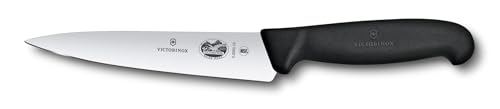
Victorinox’s Fibrox line has quietly become the go-to workhorse in many restaurant kitchens, and the 6-inch version brings that pedigree to a smaller footprint. The thin straight edge glides through tomatoes, herbs, and boneless proteins with very little resistance. A textured Fibrox handle stays planted in your hand even when wet, which is rarer than it sounds.
For tight counter spaces and quick weeknight prep, the short blade is easier to control than the 8-inch Victorinox further down this list. It also tends to sharpen up quickly on a basic whetstone, so you don’t need fancy gear to maintain it. The straight edge style favors push cuts and fine slicing over rocking-heavy techniques.
Standout Benefits
- Thin, lightweight build reduces hand strain during repetitive slicing
- Textured Fibrox handle maintains grip in wet or greasy conditions
- 6-inch length maneuvers well in apartment kitchens and compact cutting board setups
- Straight edge geometry rewards precise push cuts and clean herb work
Worth Noting
- Lightweight feel may feel underbuilt to cooks used to heftier German blades
- Handle design prioritizes function over visual warmth in a styled kitchen
Quick Facts
Whose Shelf It Belongs On
Apartment dwellers and cooks with smaller hands who want precise, low-fatigue control for daily meals.
Look Elsewhere When
The WÜSTHOF Classic 6″ Chef’s Knife is a smarter pick if you prefer a more sculpted handle and a brand rooted in traditional German cutlery.
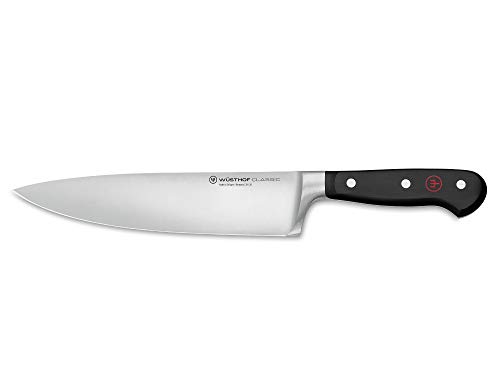
The 8-inch Classic is the WÜSTHOF most people picture when they think of a serious German chef’s knife. A full-tang build (where the steel runs the entire length of the handle) gives it reassuring heft, and the curved belly invites a natural rocking motion for rapid herb and vegetable work. Triple rivets hold the handle tight through years of regular use.
For big prep sessions like Sunday batch cooking or holiday dinners, the longer blade moves more food per stroke. Compared with the 6-inch WÜSTHOF Classic that follows, this one rewards a slightly larger board and a confident hand. The trade-off is that smaller cooks may find the length intimidating at first.
Well-Handled Touches
- 8-inch blade covers more surface area for large vegetables and whole chickens
- Full-tang, triple-riveted construction supports long-term durability
- Curved belly enables efficient rocking cuts across herbs and aromatics
- Balanced weight helps reduce effort on long, repetitive prep sessions
Trade Offs
- Longer blade can feel unwieldy on small cutting boards or tight counters
- Heavier than thinner Japanese-style blades, which may tire smaller hands faster
Built With In Mind
Cooks with larger prep spaces who regularly tackle big vegetables, whole proteins, or batch cooking projects.
Not Your Match When
The Made In 8″ Japanese Damascus Steel Gyuto is worth a closer look if you want a thinner, lighter blade with a more acute edge angle.
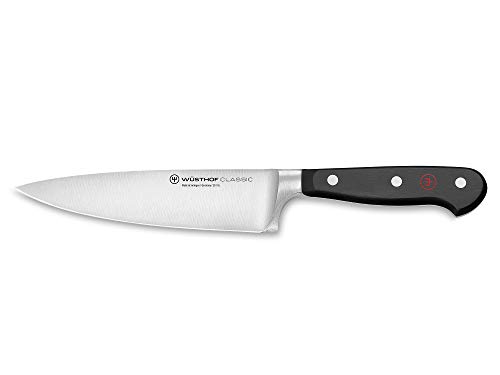
This is the same WÜSTHOF Classic experience as the 8-inch version, just trimmed down to a friendlier 6-inch length. The shorter profile keeps the knife feeling lively in hand and makes it a comfortable match for cooks who don’t want a blade that towers over their cutting board. It still carries the full-tang, triple-riveted build that defines the line.
For first-time owners of a “real” chef’s knife, the 6-inch Classic strikes a confident middle ground between the agile Victorinox and the more substantial 8-inch WÜSTHOF. It handles most home cooking tasks without forcing you to learn new techniques. The trade-off is less reach for big squash and large roasts.
The Case For It
- 6-inch length stays nimble while keeping the trusted Classic geometry
- Full-tang handle delivers the same reassuring balance as its larger sibling
- Lower learning curve than longer blades for cooks building knife confidence
- Well-supported brand with straightforward sharpening options
Points To Keep In Mind
- Less reach than 8-inch blades when tackling very large ingredients
- Handle shape favors a traditional grip, so smaller hands may need a moment to adjust
At A Glance
Who Should Grab It
Home cooks stepping up from a starter knife who want a trusted name without the weight and reach of an 8-inch blade.
A Better Fit Elsewhere
The Victorinox Fibrox 6 Inch Chef’s Knife is a smarter pick if you prefer a lighter, grippier handle for fast, wet prep work.
The 8-inch Fibrox Pro pairs the brand’s signature grippy handle with a longer blade for cooks who want more reach than the 6-inch model offers. The wider blade also doubles as a handy scoop for transferring chopped ingredients from board to pan. As the name suggests, this version is designed to tolerate the dishwasher, which is unusual in this category.
For new home cooks, the combination of a non-slip handle and a forgiving edge takes a lot of the anxiety out of learning knife skills. The 8-inch length still feels more like a real chef’s knife than a paring tool. Keep in mind that dishwasher cycles can shorten the life of even a dishwasher-safe edge, so hand-washing tends to keep the blade sharper longer.
Benefits That Matter
- Textured Fibrox handle stays secure even with wet or oily hands
- 8-inch blade gives more reach for larger vegetables and proteins
- Dishwasher-safe construction simplifies cleanup for busy weeknights
- Wide blade doubles as a scoop for transferring chopped ingredients
Minor Gripes
- Repeated dishwasher cycles can dull the edge faster than hand washing
- Handle styling is more functional than decorative on a styled countertop
Key Product Details
Made For
New home cooks who want a forgiving, grippy knife that handles a wide range of everyday prep without fuss.
Skip It When
The WÜSTHOF Classic 8″ Chef’s Knife is a stronger match if you prefer a more traditional, riveted handle and don’t mind a heavier feel.
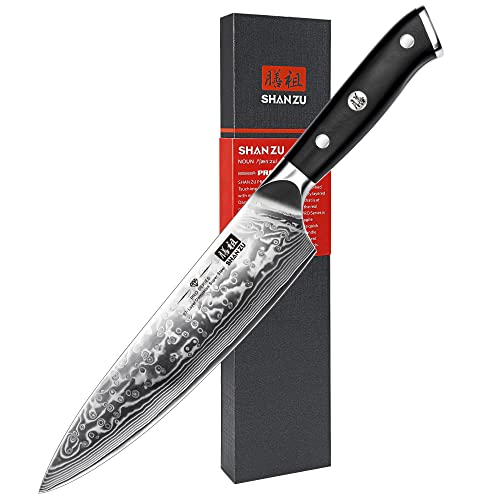
The SHAN ZU Damascus blade is built around a Japanese steel core and finished with the layered, swirled pattern that gives Damascus its visual signature. The 10Cr15MoV core (a stainless steel formula with enough carbon to hold a sharp edge) is rated at around 62 HRC on the Rockwell hardness scale, a measure of how well steel resists deformation, where higher numbers mean a harder, more edge-retentive blade. A higher hardness reading like that generally means the edge stays sharp through longer prep sessions.
For cooks who like a bit of visual drama on the magnetic strip, this one earns its place. The geometry leans more toward push cuts than rocking, similar to the Made In Gyuto further down. The trade-off is that very hard steel can be more sensitive to twisting on hard bones, so it’s better suited to produce and boneless proteins.
What Helps Most
- Layered Damascus finish adds visual depth to a displayed knife
- Hard Japanese steel core helps the edge hold up through long prep sessions
- 8-inch length covers most home cooking tasks comfortably
- Thin geometry supports clean, precise push cuts
Potential Drawbacks
- Harder steel can be more vulnerable to chipping on bones or frozen food
- Patterned finish needs careful drying to keep the layered look its best
Best Suited To
Home cooks drawn to Damascus styling who mostly prep produce and boneless proteins on a daily basis.
Another Choice May Suit
The Made In 8″ Japanese Damascus Steel Gyuto is worth considering if you want a similar look from a brand with deeper U.S. retail support.
The Babish “Clef” is part chef’s knife, part cleaver, and that hybrid shape is its whole pitch. The 7.5-inch blade is forged from a single piece of high-carbon German steel, so the build feels solid in hand. The tall profile gives you clearance for big knuckles on a rocking cut, and the wide flat works as a scoop for moving chopped food.
For cooks who like the heft of a cleaver but don’t want to give up slicing precision, this design covers both jobs. The 1.4116 steel (a common German cutlery stainless) is forgiving to maintain and takes a working edge quickly. It’s not a knife for delicate herb chiffonade work, but for hearty prep, it earns its keep.
A Strong Showing
- Hybrid cleaver-chef shape handles chopping, slicing, and scooping in one tool
- Forged from a single piece of high-carbon German steel for solid durability
- Tall blade profile gives clearance for knuckles during rocking cuts
- Wide flat surface moves chopped ingredients from board to pan easily
Where It May Fall Short
- Bulkier profile is overkill for delicate herb and small produce work
- Heavier feel may slow down cooks used to lighter Japanese-style blades
Who Will Love This
Home cooks who regularly break down hearty vegetables, squash, and boneless proteins and want a single, capable tool.
Where A Sibling Pick Shines
The WÜSTHOF Classic 8″ Chef’s Knife is a more natural fit if you want a classic German profile that handles fine slicing with less bulk.
Made In’s Gyuto (the Japanese equivalent of a Western chef’s knife) wraps a VG-10 stainless core in 66 layers of Damascus steel, which gives the blade both a distinctive look and a hard, edge-retentive center. At about 7.25 inches of cutting edge and 2.3 mm thick, the blade is thin and light compared with the German options in this roundup. A 15-degree edge angle (a low angle that makes for a sharp, slicing-focused edge) is on the more acute end of the category.
For cooks who love the feel of a thin, agile blade, this Gyuto glides through tomatoes and slices smoked salmon with very little drag. The full-tang POM handle (a durable, food-safe plastic resin often used in premium cutlery) keeps the build balanced without adding visual noise. Sharpening is best done on a whetstone since the acute angle is easy to round off on a pull-through tool.
Positive Takeaways
- Thin, light blade reduces fatigue during long slicing sessions
- VG-10 core with Damascus cladding holds a sharp edge through extended prep
- 15-degree edge angle supports clean, precise cuts on produce and fish
- Full-tang POM handle offers balanced, no-fuss control
Honest Caveats
- Thin edge is more vulnerable to damage on bones and frozen ingredients
- Acute edge angle rewards careful whetstone maintenance over quick sharpeners
Feature Snapshot
Perfect Match For
Precision-driven home cooks who prep lots of vegetables, fish, and herbs and enjoy maintaining a thin Japanese edge.
Swap It Out When
The SHAN ZU 8″ Damascus Kitchen Knife is a more accessible alternative if you want a similar aesthetic at a lower cost.
What Matters Most Before Choosing Budget Chefs Knives
A blade’s length sets the tone for how you cook. Shorter 6-inch knives feel lively and slot into small kitchens, while 8-inch options cover more surface per stroke. Match the length to the largest prep task you do regularly, not the smallest.
Steel type shapes both feel and upkeep. German stainless (like the steel in the WÜSTHOF Classics) tends to be softer, easier to sharpen, and more forgiving. Harder Japanese-style steels (such as VG-10 in the Made In Gyuto) hold an edge longer but need more careful handling around bones and frozen food.
Handle feel matters more than people expect. You can have the sharpest blade in the drawer and still fight your dinner if the handle doesn’t suit your grip. Test the shape mentally against how you hold a knife: pinched near the bolster, wrapped fully, or somewhere in between. Forgiving textures (like the Fibrox line) help in wet prep, while sculpted riveted handles feel traditional and secure.
Maintenance habits are part of the purchase. Hand washing and prompt drying stretch the life of any edge, and most of these knives reward a quick honing routine. If you know you won’t hand wash, a dishwasher-safe model like the Fibrox Pro 8″ is a more realistic fit than a delicate Japanese gyuto.
Picking Smart Across This Shortlist
Common Shopping Slip Ups
Choosing by length alone can backfire. A longer blade feels impressive, but if your cutting board is small or your hands are smaller, a 6-inch knife you’ll actually use daily will outperform an 8-inch you leave in the block. Match blade length to board size and prep style.
Ignoring handle shape is another common miss. Two knives with the same steel can feel completely different in hand, so consider whether you want a sculpted Western grip, a neutral Japanese wa-style handle, or a textured Fibrox grip for wet prep. The right shape prevents fatigue and slips.
Where The Extra Money Goes
Higher-tier picks like the WÜSTHOF Classic 8″ and the Made In Gyuto often bring harder steel, fuller tangs, and more refined grinds. Those details show up as longer edge retention, better balance, and more consistent cuts over time. For cooks who prep daily, that performance gap is real, but for occasional weeknight meals, a value pick like the Victorinox Fibrox or WÜSTHOF Classic 6″ covers the same tasks comfortably.
Frequently Asked Questions
What size chef’s knife should I buy? A 6-inch blade is easier to control in small kitchens and works well for most home cooking, while an 8-inch blade covers more surface for large vegetables and proteins. Pick based on your cutting board size and hand comfort, not what looks most impressive on a magnetic strip.
How do I maintain a budget chef’s knife? Hand wash with mild soap, dry right away, and hone the edge with a rod before each use to keep the blade aligned. Sharpen on a whetstone or service every few months depending on how often you cook.
Are Damascus blades worth the cost? Damascus layers mainly add visual character, while the cutting performance comes from the core steel underneath. If you love the look and don’t mind a bit of extra care, a Damascus gyuto is a joy to use, but you don’t need one to cook well.
Can a chef’s knife go in the dishwasher? Some models like the Victorinox Fibrox Pro 8″ are listed as dishwasher safe, but hand washing tends to keep the edge sharper for longer across all knives. Harsh detergents and jostling against other items can dull even dishwasher-rated blades over time.
What is the difference between a chef’s knife and a gyuto? A gyuto is the Japanese equivalent of a Western chef’s knife, usually thinner, lighter, and sharpened to a more acute angle. Western chef’s knives tend to have more curve along the edge for rocking cuts, while gyutos favor push cuts and slicing.
Bottom Line
The right chef’s knife is the one that fits your board, your grip, and the way you actually cook. Start with the pick that matches your most common prep task, give the handle a real mental try-on, and commit to a simple hand-wash and honing routine. From there, the rest is just dinner.
