
Book Appointment Now

7 Best Bow Bread Knives for 2026

A great bow bread knife takes the frustration out of slicing through hard-crusted sourdough or pillowy brioche without crushing either. Whether you’re baking at home daily or just want cleaner slices for weekend sandwiches, the right blade makes every cut feel intentional. This roundup walks through seven options built for different hands, kitchens, and bread habits.
The Essentials At A Glance
PickWhy We Picked ItBest ForAction
Editor’s Choice
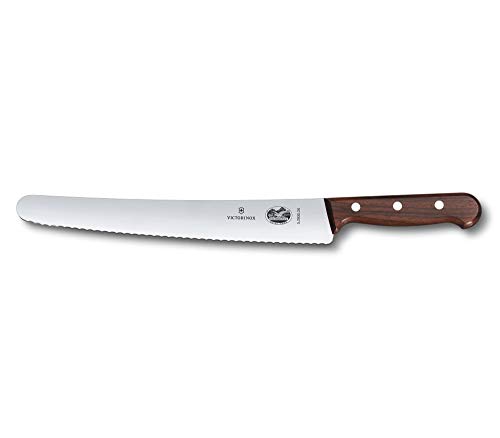
Victorinox Forschner Bread Knife Rosewood 10.25″
Classic rosewood-handled workhorse
Daily all-around slicing

Premium Pick
Made In 9″ Bread Knife Harbour Blue
Forged French build, full tang

Sharpest Edge Pick
WICKWILLOW 8″ Double Serrated Bread Knife
Swedish 14C28N steel, olive wood

All-Purpose Companion
WICKWILLOW 8″ Chef Knife Olive Wood
Razor-honed 12-degree chef edge

Refined Performance
WÜSTHOF Classic 9″ Double Serrated Knife
Double serrations, long-lasting bite

Vegetable Prep Match
WICKWILLOW 6.5″ Nakiri Knife
Flat-edge blade, olive wood grip

Small Task Specialist
WICKWILLOW 3.5″ Paring Knife
Compact 13-degree precision edge
Inside Each Recommended Option
Victorinox has a long-standing reputation in professional kitchens, and this 10.25-inch bread knife carries that pedigree into a home-friendly format. The wavy edge glides through crusty loaves without dragging, and the slim profile keeps crumbs from being shredded. For most home cooks slicing sourdough boules or rustic Italian loaves a few times a week, the geometry here just makes sense.
The rosewood handle gives it a classic, warm feel that suits a display block or a hanging rail. It’s noticeably lighter than the forged options further down this list, which some hands prefer for control and others find too light for dense, chewy breads.
Noteworthy Benefits
- Long 10.25-inch blade handles wide boules and pan loaves in fewer strokes
- Wavy edge slices through crust without compressing soft interiors
- Lightweight build reduces wrist fatigue during longer prep sessions
- Rosewood handle offers a comfortable, traditional grip feel
Worth Noting
- Lighter feel may feel underweighted when tackling very dense, hearty ryes
- Rosewood needs occasional conditioning to keep from drying out near the sink
At A Glance
Right Fit For
Home bakers and everyday cooks who want a reliable, no-fuss bread knife that handles sourdough, country loaves, and sandwich bread with equal ease.
Consider Something Else When
You want a heavier, forged feel for very dense hearth breads; in that case the Made In 9″ Bread Knife may suit you better.
Made In positions this knife in the cookware world the way a favorite French bistro might: confident, unfussy, and built for daily use. The blade is forged from a single rod of X50CrMoV15 stainless steel, meaning the metal runs continuously through the handle for better balance. That full-tang construction (where the blade steel extends all the way to the butt of the handle) gives this knife a planted, centered feel in the hand that the lighter Victorinox up top simply doesn’t offer.
At 9 inches, the blade is slightly more compact than the Victorinox, which works well in tighter kitchens or for cooks with smaller hands. The Harbour Blue resin handle is the visual signature here, durable and easy to wipe down after a floury session.
Practical Advantages
- Forged X50CrMoV15 stainless steel holds up to heavy daily slicing
- Full-tang balance gives a planted, controlled feel in the hand
- Nitrogen-treated blade resists corrosion through frequent washing
- Compact 9-inch length suits smaller kitchens and narrower cutting boards
Trade Offs
- Heavier feel may feel unwieldy for shoppers used to lightweight stamped knives
- Premium construction positions it above entry-level options in cost
Quick Facts
Made For
Confident home cooks and prosumer chefs who want a French-forged, full-tang bread knife that will outlast several lighter alternatives.
Look Elsewhere When
You want a longer blade for wide round loaves; the Victorinox Forschner Bread Knife at 10.25 inches may suit you better.
This is the first of three WICKWILLOW knives in the roundup, and the brand takes a distinctly different approach: 14C28N Swedish steel, a double-serrated edge (serrations within serrations that bite at multiple levels), and an olive wood handle that gives every knife a unique grain pattern. The 60+/-2 HRC hardness rating (a scale measuring how well steel holds its edge) means this blade resists dulling through daily baking sessions. For home bakers pulling a loaf out of the oven and slicing it the same evening, that staying power matters.
The 8-inch length is the shortest bread knife in this lineup, but the double-serrated profile compensates by working through thicker crusts with less downward pressure. It’s a different slicing rhythm than the smoother wavy edges on the Victorinox or Made In.
Everyday Perks
- Swedish 14C28N steel rated at 60+/-2 HRC holds sharpness across long baking seasons
- Double-serrated edge saws through tough crusts with minimal pressure
- High-chromium composition fights rust and corrosion without special care
- Olive wood handle brings a natural, warm aesthetic to the cutting board
Small Caveats
- 8-inch length means wider boules require more strokes than 10-inch alternatives
- Olive wood benefits from occasional oiling to prevent drying near the sink
Feature Snapshot
Best Suited To
Home bakers who slice fresh loaves often and want a steel that holds up to repeated contact with thick, chewy crusts.
Skip It When
You regularly slice large round boules that benefit from a longer blade; the Victorinox Forschner Bread Knife gives you 10.25 inches of reach.
Strictly speaking, this isn’t a bread knife, but it earns its place on the list for anyone building a coordinated WICKWILLOW set alongside the bread knife above. The same 14C28N Swedish steel and olive wood handle create visual and material continuity on the counter, and the 12-degree edge (a relatively narrow angle per side, meaning a finer, sharper cut) makes it a serious general-purpose tool for produce, proteins, and herbs.
The 8-inch chef profile is a versatile middle ground: long enough for breaking down a chicken or slicing a watermelon, short enough to feel controlled for shallots and garlic. For a cook whose bread knife already lives in the same wooden block, the visual match here is hard to beat.
What Pays Off
- Swedish 14C28N steel at 60+/-2 HRC holds a fine edge through varied kitchen tasks
- 12-degree edge angle gives a notably sharp, clean bite on produce
- Matches the WICKWILLOW 8″ Double Serrated Bread Knife in steel and handle
- Olive wood handle brings warmth and a custom grain look to the counter
A Few Limitations
- Edge isn’t serrated, so it’s not a direct bread-slicing replacement
- Fine 12-degree edge can chip if it meets bone or frozen food unexpectedly
Feature Snapshot
Whose Shelf It Belongs On
Home cooks building a matched WICKWILLOW setup who want a chef’s knife that pairs visually and materially with the bread knife earlier on this list.
Reach For A Different Pick When
Bread slicing is your primary need; the WICKWILLOW 8″ Double Serrated Bread Knife is purpose-built for that job.
WÜSTHOF’s Classic line has long been a benchmark in European kitchen cutlery, and this Pink Himalayan Salt edition layers a distinctive handle color onto the trusted double-serrated blade. The double serrations here are not just a marketing flourish: they let each tooth stay sharp longer because the cutting surface is distributed across more points. For shoppers who slice hard-crusted sourdough or dense rye weekly, that engineering detail matters.
The 9-inch length sits in a comfortable middle ground: long enough for standard pan loaves and boules, short enough to feel controlled on a smaller board. The Pink Himalayan Salt handle finish gives the knife a softer, warmer aesthetic than WÜSTHOF’s traditional black or stainless options.
Useful Touches
- Double-serrated edge stays sharper across more slicing sessions than single-serrated blades
- Requires noticeably less downward pressure on tough, thick crusts
- Pink Himalayan Salt handle finish adds a soft, distinctive look to the kitchen
- WÜSTHOF’s classic bolster and tang geometry provide balanced handling
Points To Keep In Mind
- Specialty handle color is more of an aesthetic choice than a functional upgrade
- WÜSTHOF knives typically sit at a higher tier than entry-level options
Quick Facts
Who Should Grab It
Home bakers who want a premium German-engineered bread knife with a distinctive handle finish and a blade that handles repeated sourdough slicing.
A Better Fit Elsewhere
You want a longer 10.25-inch reach for extra-wide loaves; the Victorinox Forschner Bread Knife offers more blade length in a lighter package.
Like the chef’s knife above, this is a non-bread knife from WICKWILLOW that fits a coordinated set. The Nakiri is a traditional Japanese vegetable knife with a flat, straight edge designed for full contact from heel to tip. For cooks who pair bread-baking with frequent vegetable prep, this slots in naturally alongside the WICKWILLOW bread knife.
The 6.5-inch length keeps it nimble for shallots, herbs, and small produce, and the same 14C28N Swedish steel and olive wood handle match the rest of the WICKWILLOW lineup. It’s not a slicing tool, but it expands what a matched WICKWILLOW block can do.
The Helpful Details
- Flat blade profile makes clean, straight cuts through vegetables without rocking
- Same 14C28N Swedish steel as the rest of the WICKWILLOW lineup
- Olive wood handle matches the bread knife and chef knife for a cohesive look
- Compact 6.5-inch length feels controlled for fine, detailed prep work
Honest Caveats
- Flat edge isn’t suited for rocking cuts or bread slicing tasks
- Vegetable-focused shape means it’s an addition, not a replacement for a chef’s knife
Perfect Match For
Home cooks who bake bread and cook vegetables frequently, and want a matched WICKWILLOW set across multiple prep tasks.
Swap It Out When
You need a knife that handles both vegetables and bread in one tool; the WICKWILLOW 8″ Double Serrated Bread Knife is the better all-around pick for slicing.
The last entry in the WICKWILLOW trio is a 3.5-inch paring knife, the smallest tool in this roundup and the one most often used in the hand rather than on the board. At that size, the 13-degree edge (a fine angle that supports delicate precision work) really earns its keep: trimming strawberries, peeling garlic, or scoring small pastry tops all benefit from a tight, controlled tip.
It also rounds out a full WICKWILLOW set, bread knife, chef knife, Nakiri, and paring, with shared materials and visual language. For cooks who appreciate a coordinated block, this fills the smallest slot.
A Few Strong Suits
- 3.5-inch blade handles peeling, scoring, and detail work with precise control
- 13-degree edge supports clean, accurate cuts on small produce
- Same 14C28N Swedish steel and olive wood handle as the rest of the WICKWILLOW family
- Compact size stores easily in any knife drawer or block
Things To Weigh
- Too small to function as a primary slicing or prep tool
- Paring knives demand careful storage to protect the fine tip from dulling
Who Will Love This
Home cooks building a complete WICKWILLOW set who want a small, precise paring knife that matches the bread knife on the block.
Not Your Match When
You only need one knife for slicing; the WICKWILLOW 8″ Double Serrated Bread Knife is the right tool for bread-specific work.
What Matters Most Before Choosing Bow Bread Knives
Blade Length and Loaf Size
A 10-inch-plus blade handles wide boules and large pan loaves in fewer strokes, while 8- to 9-inch options feel nimbler on smaller boards. Match the blade to the largest loaf you actually slice, not a theoretical future one.
Serration Style and Crust Type
Wavy edges glide through soft breads, while double-serrated profiles bite harder into thick, chewy crusts. For mixed households, a double-serrated blade offers more versatility across bread types.
Handle Material and Grip Feel
Rosewood, olive wood, and resin handles each feel different in the hand. Wood benefits from occasional oiling, while composite handles need less maintenance. Choose based on how often you wash and store the knife.
Steel and Edge Retention
Harder steel, measured in HRC, holds an edge longer but can be more brittle. Softer steels are easier to sharpen but need more frequent touch-ups. For daily bread slicing, mid-to-high HRC ratings balance both.
Key Considerations Across These Picks
Where Shoppers Go Wrong
A common slip is choosing by looks alone. A beautiful olive wood handle doesn’t help if the blade length is too short for your loaves, or if the serration style is too aggressive for soft sandwich bread. Match the blade geometry to the bread you actually bake or buy most often.
Where The Extra Money Goes
Premium models like the WÜSTHOF and Made In earn their higher cost through forging processes, full-tang construction, and steel treatments that extend edge life. For shoppers who slice bread daily, those upgrades pay back in fewer sharpenings and longer service. For occasional use, a solid mid-tier option handles the job without stretching the budget.
Frequently Asked Questions
What is a double-serrated bread knife edge?
It’s a blade with smaller serrations nested inside larger ones, giving more cutting points per inch. This design stays sharper longer and requires less downward pressure on tough crusts.
How long should a bow bread knife blade be?
For most home kitchens, 8 to 10 inches covers standard loaves and boules. Pick longer blades for wide round breads and shorter blades for tighter storage and smaller boards.
Can I sharpen a serrated bread knife?
Yes, but with a tapered rod or ceramic sharpening rod designed for serrations, working each groove individually. Most home cooks sharpen serrated knives less often than straight-edge blades.
How do I care for a wood-handled bread knife?
Wipe the handle dry after washing and oil it occasionally with food-safe mineral oil. Avoid prolonged soaking, which can cause wood to swell or split near the rivets.
Is a bread knife only for bread?
Not at all. Serrated bread knives handle tomatoes, citrus, and cakes cleanly. The longer blades on this list can even tackle large melons and roasted poultry in a pinch.
Wrap Up
The right bow bread knife comes down to matching blade length, serration style, and handle feel to the loaves on your counter. A 10-inch wavy edge suits wide boules, a 9-inch double-serrated blade handles tough sourdough, and a compact 8-inch option fits tighter kitchens. Pick the one that fits your bread habits, and the rest of the slicing session takes care of itself.
