
Book Appointment Now

8 Best 8 Chef Knives for 2026

You spend more time with your chef’s knife than with almost any other tool in the kitchen, so the wrong blade can quietly sabotage every meal. A knife that’s too heavy tires your wrist by the second onion, while one that won’t hold an edge turns tomatoes into smashed pulp. The right fit depends on your grip, your cutting style, and what you actually cook week to week.
The eight options below span workhorse western-style blades, gift-ready sets, razor-thin Japanese profiles, and vegetable-focused nakiri shapes. Each one solves a slightly different problem, so use the picks table as a map and the detailed reviews as a closer look at trade-offs. For most home cooks, a single well-balanced 8-inch chef’s knife covers the vast majority of prep, which is why that size anchors most of this list.
How The Shortlist Stacks Up
PickWhy We Picked ItBest ForAction

Editor’s Choice
Tramontina Pro Series Forged 8-Inch Chef’s Knife
Forged full-tang workhorse build
Everyday home cooking

Gift-Ready Choice
Mkeevee 8-Inch Chef’s Knife Gift Set
Presentation box for gifting
Father’s Day gifting

Premium Pick
Sunnecko 8-Inch Japanese Damascus Chef Knife VG10
Layered Damascus VG10 core
Style-conscious home cooks

All-Round Performer
Sunnecko 8-Inch Chef Knife Pakkawood Handle
Sheath plus pakkawood grip
Outdoor and BBQ cooks

Value Pick
imarku Japanese Chef Knife 8-Inch
High-carbon steel at friendly cost
Beginner home cooks
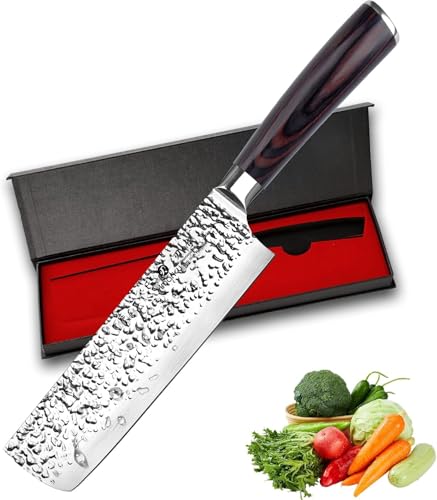
Vegetable Specialist
imarku Nakiri Knife 7-Inch
Flat-edge nakiri slicing
Vegetable-heavy meal prep
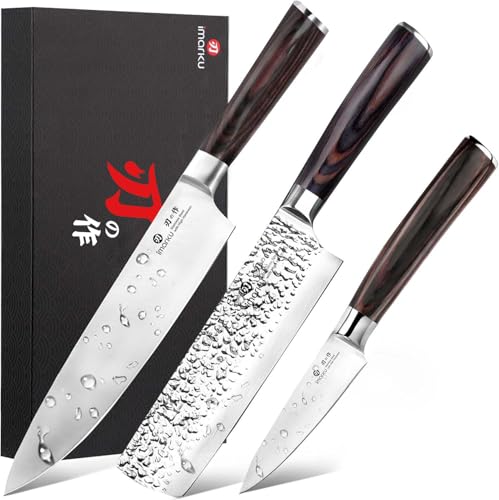
Set Builder
imarku 3-Piece Kitchen Knife Set Pakkawood
Three core blades bundled
New kitchen setups

Clever Shape
Sunnecko Nakiri Knife 7-Inch
Rectangular cleaver profile
Chop-focused prep cooks
Taking A Closer Look At The Options
Tramontina’s Pro Series 8-inch sits at the top of this list because it does the boring, important things well: it feels planted in the hand, it shrugs off a week of nightly prep, and it doesn’t demand a sharpening stone after every dinner. The blade is forged from a single piece of high-carbon stainless steel (an alloy that resists rust while keeping a working edge), and the full-tang construction means the steel runs the full length of the handle for added heft.
For anyone cooking for a family or tackling big Sunday batches, the bolster and weight distribution do a lot of the work for you, so a rocking cut through a mountain of carrots feels less like a workout. Compared to the lighter Japanese-style picks later on this list, this one feels more like a European workhorse, and many home cooks find that reassuring rather than tiring.
Real Benefits
- Forged single-piece construction gives long-term durability through heavy daily use.
- Taper-ground blade (blade thins gradually from spine to edge) holds a serviceable edge across a week of home cooking.
- Full-tang balance keeps the knife planted during rocking cuts through dense vegetables.
- Stain-free high-carbon steel is more forgiving of accidental dishwasher runs or wet storage.
- Traditional handle shape fits a wide range of grip styles without forcing a specific hold.
Things To Consider
- Heavier than typical Japanese-style blades, so smaller hands may notice wrist fatigue during marathon prep sessions.
- Edge angle sits a bit thicker than the razor profiles further down this list, so paper-thin tomato slices take more finesse.
Feature Snapshot
Who It Suits Best
Family cooks and serious home chefs who want one dependable 8-inch blade for everything from breaking down a chicken to slicing pineapple.
Where Another Pick Suits Better
For a razor-thin, lighter grip and a more delicate slicing feel, the Sunnecko 8-Inch Japanese Damascus Chef Knife VG10 brings a noticeably different balance.
This Mkeevee 8-inch lands on the list for a specific reason: when the goal is a polished gift rather than a purely spec-driven purchase, the presentation matters as much as the blade. The knife comes in an “exquisite” gift box, which removes the awkward step of wrapping a sharp object before a holiday or birthday.
The blade uses high-carbon steel, which keeps an edge well for typical home use, and the format is aimed squarely at daughters, sons, and kids shopping for a parent who loves to cook. It works best when paired with a handwritten recipe or a small cutting board, since a single knife can feel light as a standalone gift.
Standout Benefits
- Gift-ready packaging removes the need for separate wrapping or a presentation sleeve.
- High-carbon steel blade handles everyday slicing, dicing, and chopping tasks.
- 8-inch length suits a wide range of home cooks without feeling oversized.
Worth Noting
- Positioned as a gift item, so the included packaging adds weight and shipping size that a bare knife wouldn’t.
- Owners commonly report that the box is more decorative than protective for long-term storage, so a separate knife block or sheath helps keep the edge safe.
Made For
Children and family members shopping for a parent or grandparent who would appreciate a presentation-ready kitchen upgrade.
Consider Something Else When
For a home cook building their own everyday toolkit, the imarku Japanese Chef Knife 8-Inch offers a similar 8-inch profile with more focus on performance than gift packaging.
The Sunnecko 8-inch Damascus blade leans into the visual side of Japanese-style knives without abandoning real cutting performance. The blade is built from 67 layered Damascus steel around a VG10 core, which is a stainless steel known for holding a sharp edge longer than standard stainless. The 10 to 12 degree edge angle is noticeably thinner than the Tramontina at the top of this list, and that translates to cleaner cuts on ripe tomatoes and sashimi-grade fish.
For cooks who want a statement piece on a magnetic strip, the ripple pattern does the talking, while the thinner profile does the slicing. Compared to the budget-friendly imarku option further down, the trade-off is mostly in edge geometry and finish rather than in raw durability, so this is a knife to use, not to baby.
Where It Excels
- VG10 core steel holds a sharp, polished edge through extended prep sessions.
- 67-layer Damascus construction resists corrosion and resists dulling under regular home use.
- Thin 10 to 12 degree edge makes clean work of delicate proteins and ripe produce.
- Patterned blade doubles as a visual centerpiece on a magnetic wall strip.
Honest Caveats
- Thin edge geometry is less forgiving of accidental twists against bone or frozen food, so technique matters.
- Layered Damascus needs gentle hand washing and prompt drying to keep the pattern looking its best over time.
Key Specs
Best Suited To
Home cooks who appreciate Japanese-style cutting feel and want an eye-catching centerpiece blade for daily prep.
Not Your Match When
For a heavier, more forgiving blade that handles rougher tasks like breaking down whole chickens, the Tramontina Pro Series Forged 8-Inch Chef’s Knife is the better match.
This second Sunnecko entry in the list covers a different slice of the market: cooks who take their kitchen work outside. The 8-inch blade is hand-sharpened to a 12 to 15 degree edge, and the package includes a protective sheath, which is the kind of detail that matters when a knife ends up next to a grill, a cooler, or a camp stove.
The pakkawood handle (a dense, resin-impregnated wood that resists moisture better than raw hardwood) gives a warm grip that stays comfortable through long slicing jobs, and the high-carbon stainless steel body holds up to routine contact with meat and vegetables alike. Set against the Sunnecko Damascus pick, this one is plainer in look but more practical for travel and BBQ settings.
Notable Upsides
- Included sheath protects the edge during transport to a patio, picnic, or tailgate.
- Pakkawood handle offers a warm, secure grip that stays stable with wet or oily hands.
- 12 to 15 degree edge cuts cleanly through tomatoes and proteins without crushing soft produce.
- High-carbon stainless steel balances edge retention with everyday stain resistance.
Trade Offs
- Sheath adds bulk to storage, so drawer space is tighter than with a bare blade.
- No Damascus cladding here, so the visual appeal is more functional than decorative compared to the Sunnecko Damascus pick above.
Spec Overview
Who Will Love This
Outdoor cooks, BBQ hosts, and anyone who needs a single knife that travels well to patios, parks, or vacation kitchens.
Look Elsewhere When
For a pure indoor showpiece with layered Damascus steel, the Sunnecko 8-Inch Japanese Damascus Chef Knife VG10 fits the bill instead.
The imarku 8-inch has earned a quiet reputation as the “first real knife” for many home cooks, and the source description backs that up: the blade runs higher in carbon content than typical entry-level stainless, which translates into a noticeably harder edge that holds through multiple cooking sessions.
It’s a multipurpose gyutou (a Japanese-style chef’s knife, slightly slimmer than a classic western chef’s knife) shape, so it handles vegetables, boneless proteins, and fruit without forcing you to switch tools mid-recipe. Compared to the heavier Tramontina, this one feels lighter in the hand, which most people with smaller grips tend to prefer.
Everyday Wins
- Higher-carbon stainless steel holds an edge longer than typical budget options.
- Gyutou profile works comfortably for rocking cuts, push cuts, and tap chopping.
- Lighter overall weight reduces wrist strain during extended prep sessions.
- Often positioned as a gift for parents, which makes it a sensible first-upgrade pick.
Points To Note
- Factory edge is serviceable but not razor-fine, so a quick hone or light sharpening helps unlock the full feel of the blade.
- Handle shape is fairly generic, so cooks with very large hands may want to hold it before committing.
Perfect Match For
Beginner home cooks and gift shoppers who want a noticeably better blade than a basic block set without stepping into premium pricing.
A Better Fit Elsewhere
For cooks who want a heavier, more robust western-style feel, the Tramontina Pro Series Forged 8-Inch Chef’s Knife brings more weight and a thicker spine.
The nakiri shape (a Japanese-style knife with a flat, rectangular edge designed for clean, straight-down vegetable cuts) breaks from the curved western and gyutou profiles earlier in this list, and the imarku 7-inch version does the usual nakiri job well. The flat edge means you chop straight down, so vegetables stay on the board instead of sliding forward with each rocking pass.
The blade is sharpened to a 15 degree angle and pairs that geometry with an anti-stick design, which helps thin slices of potato and onion release cleanly. For cooks who build dinner around a mirepoix or a stir-fry base, this knife earns its place next to a more curved general-purpose blade.
The Helpful Details
- Flat rectangular edge makes clean, even cuts through onions, cabbage, and root vegetables.
- 15 degree edge angle is sharper than the average western chef’s knife out of the box.
- Anti-stick surface treatment helps thin slices release rather than clinging to the blade.
- 7-inch length is easy to control in tighter prep areas and smaller kitchens.
Some Limits To Know
- The flat edge doesn’t rock, so cooks used to a curved chef’s knife need a moment to retrain their motion for herbs and rounded produce.
- Not the right tool for breaking down larger proteins, so it works best as a second knife rather than a primary one.
Who Should Grab It
Vegetable-forward home cooks who prep large batches of stir-fry, soup bases, or salad ingredients each week.
Reach For A Different Pick When
For a single-knife household where one blade has to handle everything from chicken to tomatoes, the imarku Japanese Chef Knife 8-Inch is the more versatile shape.
The imarku 3-piece set is for the cook who’s starting from a near-empty drawer. Each blade is hand-polished to a 15 degree edge with a 2.3mm thickness, which is a sensible middle ground between too-thin (chips easily) and too-thick (won’t slice cleanly). The pakkawood handles tie the set together visually and feel more substantial than the molded plastic handles on most starter blocks.
Where this set earns its spot is the convenience factor: instead of buying three separate knives and hoping they look related on the counter, you get a matched set out of the box. Compared to the standalone imarku 8-inch earlier, the per-knife performance is similar, but the set saves the trouble of matching handles later.
Points In Its Favor
- Three matched blades cover chef’s knife, utility, and paring tasks in one purchase.
- Pakkawood handles give a more refined look and feel than plastic-handled starter sets.
- 15 degree edge with 2.3mm thickness balances sharpness and durability for new cooks.
Possible Compromises
- No block or sheath included, so storage planning matters from day one to protect the edges.
- Set pieces lean lighter than standalone western equivalents, so cooks used to heavier knives need a brief adjustment period.
At A Glance
The Right Fit
New homeowners, recent grads, and anyone moving into a first kitchen who wants a matched set rather than a random drawer of mismatched blades.
Swap It Out When
For an established cook who already owns a solid chef’s knife and just needs a specialist for vegetables, the imarku Nakiri Knife 7-Inch is a smarter single add-on.
The Sunnecko 7-inch nakiri brings a slightly different flavor to the vegetable-knife slot on this list, leaning into what the brand calls a “cleaver” profile. In practice, that means a taller, more rectangular blade with extra knuckle clearance, so your fingertips stay well clear of the board even on the deepest cuts.
Hand-polished to a 12 degree edge, it sits a touch sharper than the imarku nakiri and feels well-suited to cooks who like long, straight-down chopping strokes for big piles of greens, squash, and aromatics. The trade-off is that the wider blade takes up more real estate on a small cutting board, so it shines on a generous prep surface.
Useful Touches
- Taller blade gives extra knuckle clearance, which is helpful during long prep sessions.
- 12 degree double-bevel edge handles both soft vegetables and boneless meat cleanly.
- Wider profile scoops chopped ingredients off the board in a single pass.
Practical Considerations
- Wider blade crowds small cutting boards, so prep space matters more than with a narrower gyutou.
- Straight edge means no rocking motion, so herbs and rounded produce need a different blade or a pulling cut.
Built With In Mind
Chop-focused cooks who prep large volumes of vegetables and want the knuckle clearance and scooping ability of a wider blade.
Another Choice May Suit
For a smaller board or a tighter kitchen, the imarku Nakiri Knife 7-Inch takes up less counter real estate while still covering the core vegetable work.
What Matters Most Before Choosing 8 Chef Knives
Blade Length And Weight In Your Hand
Most home cooks settle into an 8-inch chef’s knife because it handles a whole chicken and a sheet-pan pile of vegetables without feeling oversized. Smaller hands often find 6 or 7 inches easier to control, while people with larger hands may prefer the extra reach of a 10-inch blade for big squash and wide proteins. Picking up the knife in person, even briefly, is the fastest way to know whether the balance feels planted or tip-heavy.
Steel Type And Edge Geometry
High-carbon stainless steel sits in the sweet spot for most people: harder than basic stainless, which helps the edge last, but more rust-resistant than traditional carbon steel. VG10 and similar premium cores go a step further on edge retention for cooks who don’t want to sharpen weekly. Thinner edges (10 to 15 degrees) slice more cleanly, while thicker edges tolerate more aggressive technique and accidental contact with bone.
Handle Feel And Grip Style
A handle that doesn’t match your grip is the fastest path to hand fatigue, no matter how good the steel is. Western-style rounded handles suit a standard pinch grip, while Japanese-style octagonal or D-shaped handles encourage a more forward grip for precision work. Pakkawood and similar resin-treated wood handles balance warmth and moisture resistance, while molded polymer handles are lighter and easier to clean.
Intended Use And Kitchen Setup
A single all-purpose chef’s knife covers most households, but cooks who prep a lot of vegetables often add a nakiri to the drawer, and those who break down whole fish or whole chickens may want a longer, thinner blade. Storage matters too: a magnetic strip, an in-drawer organizer, or a protective sheath each suits different kitchen layouts and knife counts.
Smart Choices Before You Decide
Common Shopping Slip Ups
One of the easiest mistakes is buying a knife that looks sharp in product photos but ships with a weak factory edge, so plan on a quick hone or professional sharpen shortly after arrival. Another is choosing a single 10-inch blade because longer sounds more capable, only to find it clumsy on a small cutting board. Finally, don’t skip handle fit: a knife that looks great in the listing can feel wrong in your specific grip, and that mismatch shows up as wrist pain after a week of real cooking.
When Paying More Pays Off
Spending more on a chef’s knife usually buys three things: a harder steel core that holds an edge longer, a thinner grind that makes cleaner cuts with less effort, and a handle that feels more controlled during long sessions. For a cook who chops every night, those upgrades add up to less time maintaining the knife and more time enjoying the cutting. For someone who cooks twice a week, a mid-range option is often the more sensible place to land, and a higher tier makes more sense as a later upgrade once habits are clear.
Frequently Asked Questions
What size chef’s knife is best for home cooking?
An 8-inch chef’s knife is the most versatile size for most home kitchens, handling vegetables, proteins, and herbs without feeling too large or too small. Smaller hands may prefer 6 or 7 inches for tighter control, while 10-inch blades suit cooks who work on large cutting boards and break down big produce.
How often should a chef’s knife be sharpened?
A home cook typically needs to hone a chef’s knife every few uses and sharpen it every few months, depending on how often it goes to work. Thinner Japanese-style edges may need more frequent touch-ups, while thicker western blades can go longer between full sharpenings.
Can one chef’s knife replace a full knife set?
For many households, a single well-balanced 8-inch chef’s knife covers the majority of prep, with a paring knife handling small jobs like trimming and peeling. Cooks who prep a lot of vegetables often add a nakiri, and those who break down whole proteins sometimes add a slicer, but a full block set is rarely necessary for everyday cooking.
What is the difference between a chef’s knife and a gyutou?
A gyutou is a Japanese-style chef’s knife, typically slimmer, lighter, and ground to a thinner edge angle than a classic western chef’s knife. Both shapes perform the same core prep tasks, but a gyutou usually feels more precise, while a western chef’s knife feels more robust and forgiving.
Are higher-carbon knives harder to maintain?
Higher-carbon stainless steel does require a bit more care, mainly prompt hand washing and drying after use to prevent spotting or rust. In return, the harder edge holds sharpness longer, so sharpening sessions are less frequent than with basic stainless blades.
Closing Remarks
The right chef’s knife is the one that disappears in your hand and stays sharp through your real cooking routine, not the one with the flashiest spec sheet. Start with a balanced 8-inch that matches your grip, then add a specialist only when a specific task, like vegetable prep or outdoor cooking, starts to feel underserved. A little attention to fit and care will turn any of the picks above into a long-term kitchen partner.
