
Book Appointment Now

How to Design a Functional Kitchen on a Budget

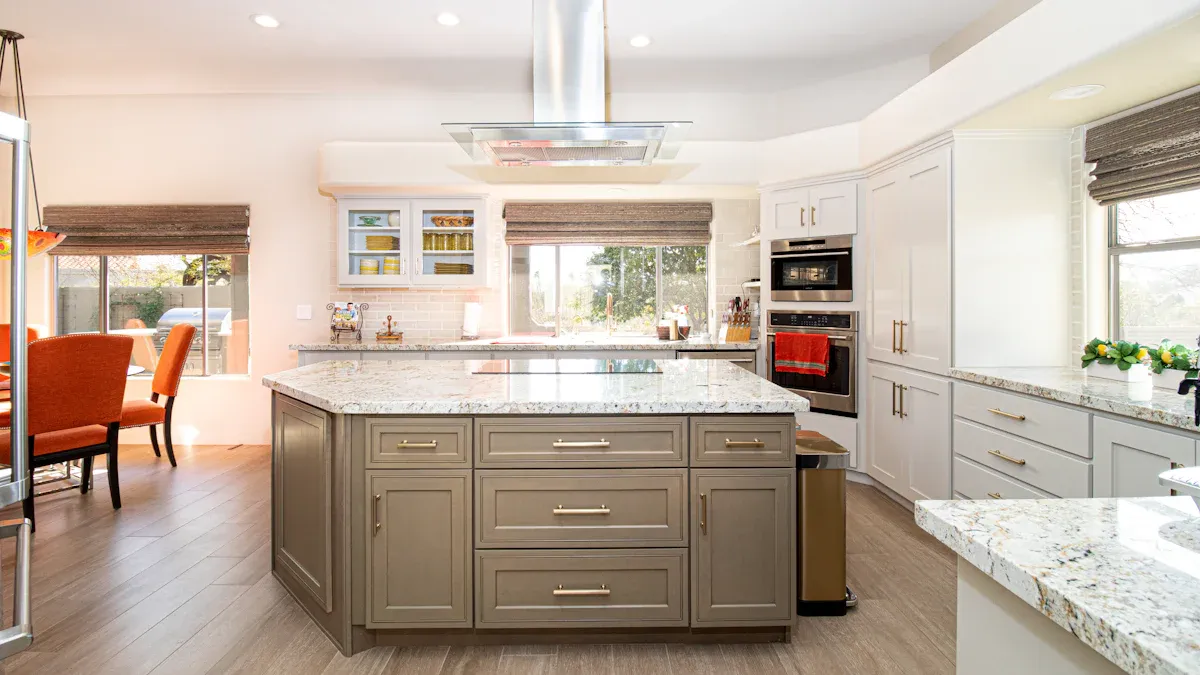
A functional kitchen is the heart of your home, where meals come to life and memories are made. However, designing a kitchen on a budget can feel overwhelming. You might worry about costs or limited space. Don’t fret! With some smart strategies, you can design a kitchen that meets your needs without breaking the bank.
Key Takeaways
Identify essential features for your kitchen, such as counter space and storage, to enhance functionality and enjoyment.
Set a realistic budget and allocate funds wisely to key areas like cabinets and countertops for effective kitchen design.
Incorporate budget-friendly materials and DIY projects to refresh your kitchen without overspending.
Assess Needs
Essential Features
When designing your kitchen, start by identifying the essential features that will make it functional and enjoyable. Here’s a list of must-have elements to consider:
Counter space: Ample workspace is crucial for preparing meals, especially if you cook for family or friends.
Multiple outlets: You’ll want enough outlets to power various appliances at once, from blenders to coffee makers.
Open floor plan: This layout enhances interaction between cooking and entertaining areas, making it easier to host gatherings.
Storage space: Keeping your kitchen organized is vital. Ensure you have enough cabinets and shelves for all your cooking essentials.
High-quality appliances: Invest in efficient appliances that make meal prep and cleanup easier.
Ample space next to the cooktop: This feature improves your efficiency while cooking, allowing you to keep ingredients and tools close at hand.
Easily accessible cupboards: You should be able to reach your cooking equipment without hassle.
Drawers or appliance garages: These help you store large kitchen tools neatly and out of sight.
A large kitchen island: This can serve as a gathering place and a prep area, adding both functionality and social space.
Bright lighting: Good lighting is essential for visibility while cooking, ensuring safety and precision.
Must-Haves
Next, prioritize your must-haves based on your cooking habits. Think about how you use your kitchen daily. For instance, if you love baking, you might need more counter space and storage for baking tools. Modern kitchen designs focus on innovative storage solutions that enhance efficiency and accessibility. This organization not only streamlines cooking processes but also inspires you to experiment with new ingredients and techniques.
Here are the top five must-have items for a budget-friendly kitchen:
A floral arrangement (faux or live plants) – averages around $15-$20 for faux, or about $10 for a dozen fresh roses.
At least one set of elegantly styled kitchen towels – available for $5-$10.
A tray and candle – a nice tray can be found for around $10, and a quality soy candle for about $10.
By focusing on these essential features and must-haves, you can create a kitchen that not only fits your budget but also meets your cooking needs effectively.
Budget Wisely
Set a Realistic Budget
Creating a budget for your kitchen design is crucial. You want to avoid overspending while still achieving a functional space. Start by determining how much you can realistically afford. Consider your income, savings, and any potential financing options. Here are some tips to help you set a budget:
Use budgeting software or apps: These tools can help you track your expenses and stay organized.
Keep detailed records: Document every transaction related to your kitchen project. This will help you see where your money goes.
Regularly compare expenses to your budget: Check in frequently to ensure you’re on track.
Adjust your budget as needed: If you find costs exceeding your estimates, don’t hesitate to make changes.
Reassess priorities: If certain features are too expensive, consider alternatives that fit your budget.
Communicate with contractors: If you’re working with professionals, keep them informed about your budget constraints.
Allocate Funds
Once you have a budget in place, it’s time to allocate funds to different areas of your kitchen. This step is essential for ensuring that you spend wisely. Here’s a breakdown of how you might consider distributing your budget:
Item | Percentage |
|---|---|
Cabinets | 25-35% |
Countertops | 10-15% |
Appliances | 15-20% |
This allocation helps you focus on key areas that impact functionality. For instance, cabinets often take up a significant portion of the budget, as they provide essential storage. Countertops are also crucial, as they serve as your main workspace.
Interestingly, many homeowners allocate between 10-20% of their kitchen remodel budget to countertops. Some even spend up to 40% on this feature, highlighting its importance in both aesthetics and functionality. By understanding these percentages, you can make informed decisions that align with your needs and budget.
Remember, a well-planned budget not only saves you money but also ensures that your kitchen remains functional and stylish. With careful planning and smart allocation, you can create a kitchen that meets your needs without overspending.
Budget Materials
Affordable Countertops
When it comes to countertops, you have plenty of budget-friendly options. Here’s a quick look at some affordable materials you can consider:
Countertop Material | Price per Square Foot | Notes |
|---|---|---|
Butcher Block | $50 – $75 | Requires maintenance, suitable for DIY installation. |
Laminate (Amber Maple) | $2.50 | Inexpensive, printed with wood pattern, ideal for budget refresh. |
DecoMetal Laminate | $5 – $15 | Variety of colors and textures, suitable for kitchen islands. |
Real Stainless Steel | $160+ | Higher cost, used in professional kitchens, includes installation. |
Laminate countertops stand out as one of the most economical choices. They mimic the look of more expensive materials like granite or quartz without the hefty price tag. Plus, they come in various colors and patterns, allowing you to customize your kitchen’s look.
Cabinet Solutions
Finding budget-friendly cabinets can be a game-changer for your kitchen design. Here are some smart solutions to consider:
Sustainable cabinetry: Eco-friendly practices have made sustainable options more affordable.
Recycled materials: These cabinets are often less expensive and good for the environment.
Modular cabinets: They offer cost-effective customization options, allowing you to create a unique layout.
Ready-to-assemble cabinets: Many online retailers provide these, often at lower prices than traditional options.
Refacing your existing cabinets can also save you a lot of money. It costs up to 50% less than a full replacement, allowing you to refresh your kitchen without breaking the bank.
By choosing the right materials and solutions, you can create a stylish and functional kitchen that fits your budget.
Design a Kitchen Layout
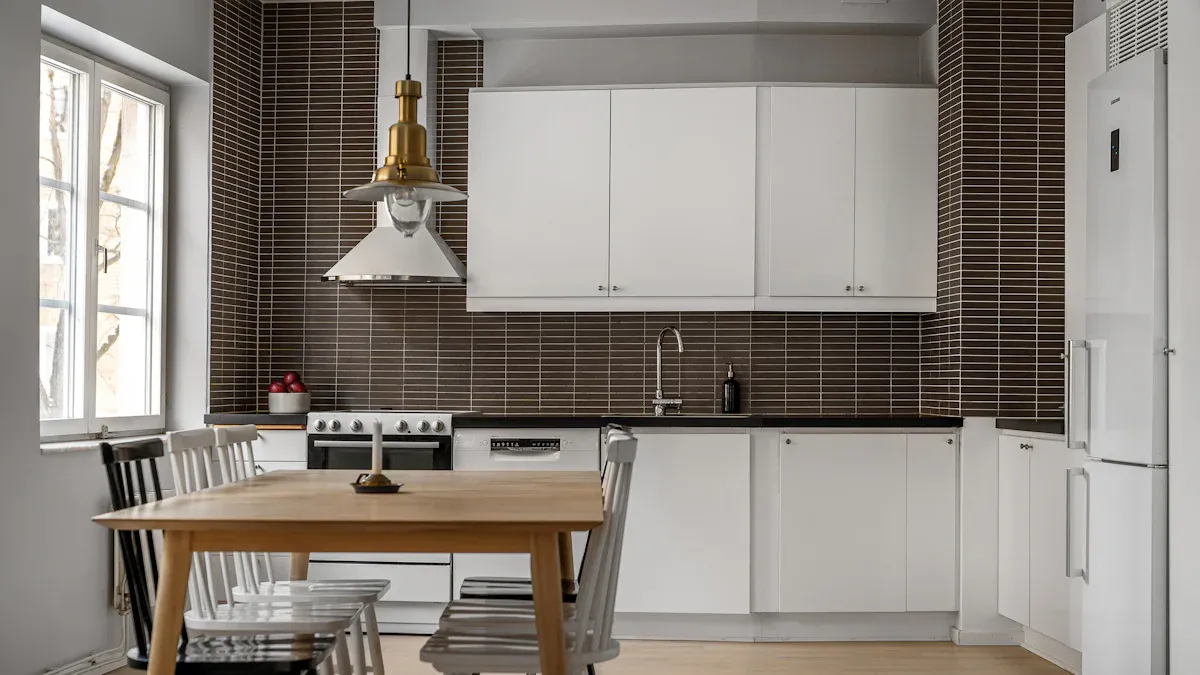
Maximize Space
When you design a kitchen, maximizing space is key, especially in a small kitchen. Here are some layout options that can help you make the most of your area:
L-Shaped Layouts: These utilize corner space effectively, allowing for an open-concept feel and enhanced storage options.
Galley Kitchens: Featuring two parallel counters, galley kitchens maximize efficiency and storage in narrow spaces.
U-Shaped Layouts: This design provides ample counter space and storage while keeping everything compact.
By choosing one of these layouts, you can add functionality to your kitchen without sacrificing style.
Functional Workflow
Creating a functional workflow is essential for a smooth cooking experience. The work triangle concept can significantly enhance your kitchen’s efficiency. This concept focuses on optimizing movement between the sink, stove, and refrigerator. Here’s how it works:
Keep the distances between these key components between four and nine feet. This promotes accessibility and reduces excessive walking.
Place well-designed drawers and cabinets near these areas. This makes essential cooking tools and ingredients easily reachable, streamlining meal preparation.
Avoid common mistakes that can disrupt your kitchen’s functionality. Here are a few to watch out for:
Cramped kitchen layouts can limit movement and make cooking feel stressful.
Inefficient kitchen workflows can disrupt your natural cooking rhythm.
Poor lighting placement can create dark corners, affecting both safety and atmosphere.
By focusing on maximizing space and ensuring a functional workflow, you can design a kitchen that not only looks great but also works efficiently for your cooking needs.
Multipurpose Storage Solutions
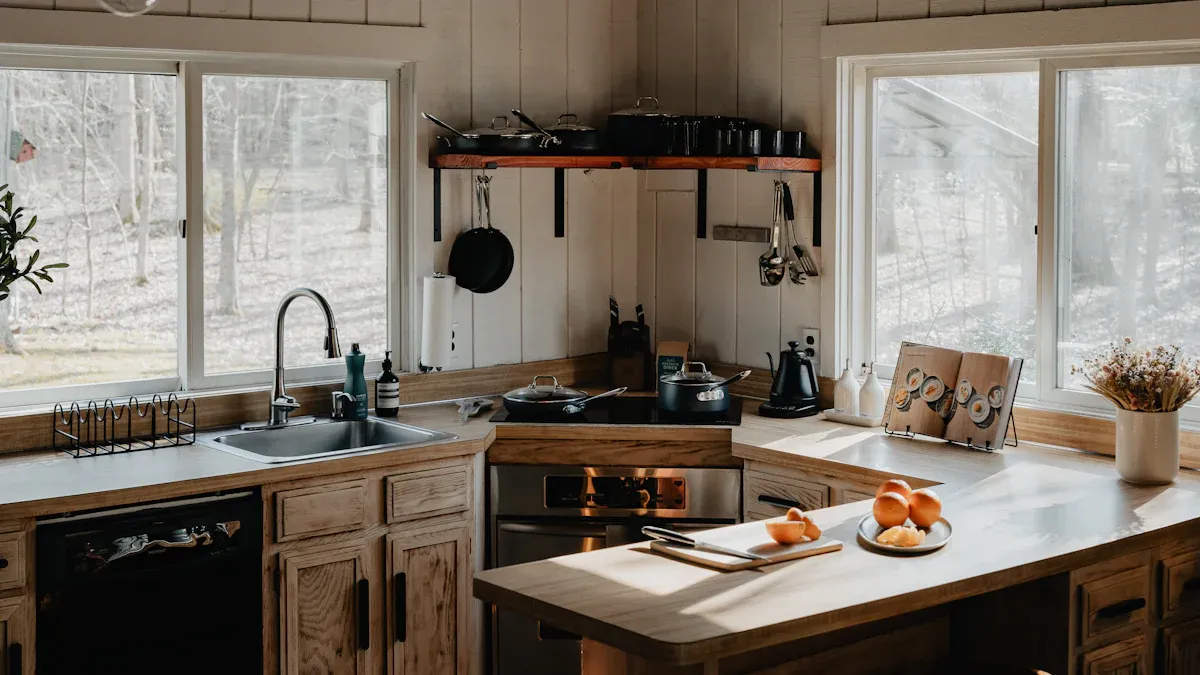
Pull-Out Cabinets
Pull-out cabinets can transform your kitchen into a more organized space. They maximize storage by utilizing areas that often go unused, like under the sink. Here are some benefits of incorporating pull-out cabinets:
Benefit | Description |
|---|---|
Maximize Space | They free up floor space, creating a safer kitchen environment. |
Achieve a Sleek Look | Pull-out cabinets hide waste bins, enhancing your kitchen’s aesthetic. |
Unmatched Convenience | Easy access to waste disposal improves efficiency while cooking. |
Superior Hygiene | They contain odors better than open bins, keeping your kitchen fresher. |
Effortless Recycling | Double pull-out bins make sorting waste and recyclables a breeze. |
Enhance Safety | Built-in designs reduce tripping hazards, making kitchens safer for everyone. |
Boost Home Value | High-quality pull-out bins can increase your property’s value. |
Compared to traditional cabinets, pull-out designs often take up more usable width. They can deduct around five inches from the actual usable space, but they shine in wide door openings, making them perfect for small appliances and oddly shaped items.
Drawers for Storage
Drawers are another fantastic way to enhance your kitchen’s organization. They allow you to store items efficiently and keep everything within reach. Here are some effective drawer types to consider:
Organizer Type | Purpose |
|---|---|
Cutlery dividers | For utensils and everyday tools |
Plate and bowl organizers | Designed for deep drawers |
Pan and pot organizers | Adjustable layouts for heavy cookware |
Multi-purpose inserts | Flexible sections for mixed storage |
You can store a variety of items in your drawers, such as spices, coffee supplies, dishes, and even small appliances. Switching from shelves to drawers can significantly increase your storage space. For example, removing one shelf and adding three pull-out drawers can lead to a 25% increase in usable storage!
By incorporating these multipurpose storage solutions, you can create a kitchen that is not only functional but also stylish and organized.
DIY and Upcycling
Simple DIY Projects
You can refresh your kitchen with some simple DIY projects that won’t break the bank. Here are a few ideas to get you started:
Add custom light rails to your cabinets. This not only enhances aesthetics but also hides lighting hardware.
Update cabinet end panels with trim or decorative elements. This small change can significantly improve the look of your kitchen island.
Create built-in refrigerator cabinetry. This helps optimize space and adds a stylish touch.
Install decorative shelving to display your favorite dishes or cookbooks.
These projects can save you money. A homeowner saved over $30,000 by taking on their kitchen renovation themselves. However, remember that while DIY can be cost-effective for cosmetic updates, complex installations might lead to higher costs due to mistakes.
Upcycling Ideas
Upcycling is a fantastic way to reduce renovation costs while adding unique touches to your kitchen. Here are some creative upcycling ideas:
Use wine corks as classy place card holders or food label holders.
Transform tea towels into whimsical kitchen valances or wall art.
Repurpose cereal boxes as stylish magazine organizers.
Create a bird feeder from chipped china.
Elevate spare china plates with heavyweight stemware to make cake stands.
Turn tin cans into countertop storage.
Experts note that 92% of homeowners incorporate sustainable features during kitchen renovations, which often include upcycled materials. By embracing these DIY ideas and upcycling projects, you can create a kitchen that reflects your style while staying within budget.
Final Touches
Budget Decor
Adding budget-friendly decor can significantly enhance your kitchen’s aesthetics. Here are some ideas to consider:
Repurpose a Rug: Use a rug you already own to bring bold colors and patterns into your kitchen.
Style Your Shelves: Clear clutter from open shelves. Arrange kitchen tools and decorative items for a stylish look.
Create a Coffee Bar: Designate a corner for your coffee machine and supplies. This cozy coffee station can become a favorite spot.
Add Color to Cabinets: A fresh coat of paint can refresh your cabinets without the high cost of replacement.
Go High Contrast: Bright white elements can lighten a dark kitchen palette, making it feel more inviting.
Label Those Shelves: Use uniform labels for pantry organization. This not only enhances visual appeal but also makes finding items easier.
Thoughtful updates like lighting can change the ambiance of your kitchen. You can find options for under $300 that will make a big difference. Incorporating organic materials like warm woods can also transform your space without major renovations.
Practical Accessories
Practical accessories can improve your kitchen’s functionality. Here’s a table of some recommended items:
Accessory | Description |
|---|---|
Open Shelving | Adds character and maximizes vertical space; can be made from budget-friendly materials like white oak. |
Pot Rack | Increases storage space; wall-mounted options start at CAD 14, and copper pipes can be a cost-effective choice. |
Undercabinet Lighting | Provides focused illumination for food preparation, eliminating shadows; costs range from CAD 20 to CAD 70. |
These accessories optimize storage and improve organization. Hooks, bins, and rails can attach to cabinet doors, keeping utensils and tools within reach. Adjustable shelving allows you to customize storage space, accommodating various item sizes. By incorporating these practical accessories, you can create a more efficient kitchen workspace.
You can create a functional kitchen on a budget! Start by assessing your needs and prioritizing essential features. Consider these tips:
Use affordable materials like classic subway tiles or peel-and-stick options for backsplashes.
Refinish existing hardwood floors instead of installing new ones to save money.
Look for secondhand decor to add character without high costs.
By planning wisely and focusing on upgrades that enhance functionality, you’ll enjoy a beautiful kitchen that fits your budget. So, roll up your sleeves and start designing your dream kitchen today!
FAQ
What are the best ways to create zones in my kitchen?
You can create zones by grouping similar tasks together. For example, keep cooking utensils near the stove and storage near the refrigerator for better organization.
How can I remodel my kitchen on a tight budget?
Focus on small updates like painting your cabinets, changing hardware, or adding new lighting. These changes can refresh your kitchen layout and design without major expenses.
What should I consider when planning my kitchen layout?
Think about your cooking habits and how you move in the kitchen. A functional layout should minimize steps between zones, making meal prep easier and more efficient.
