
Book Appointment Now

Top 20 Cooking Tips for Home Cooks

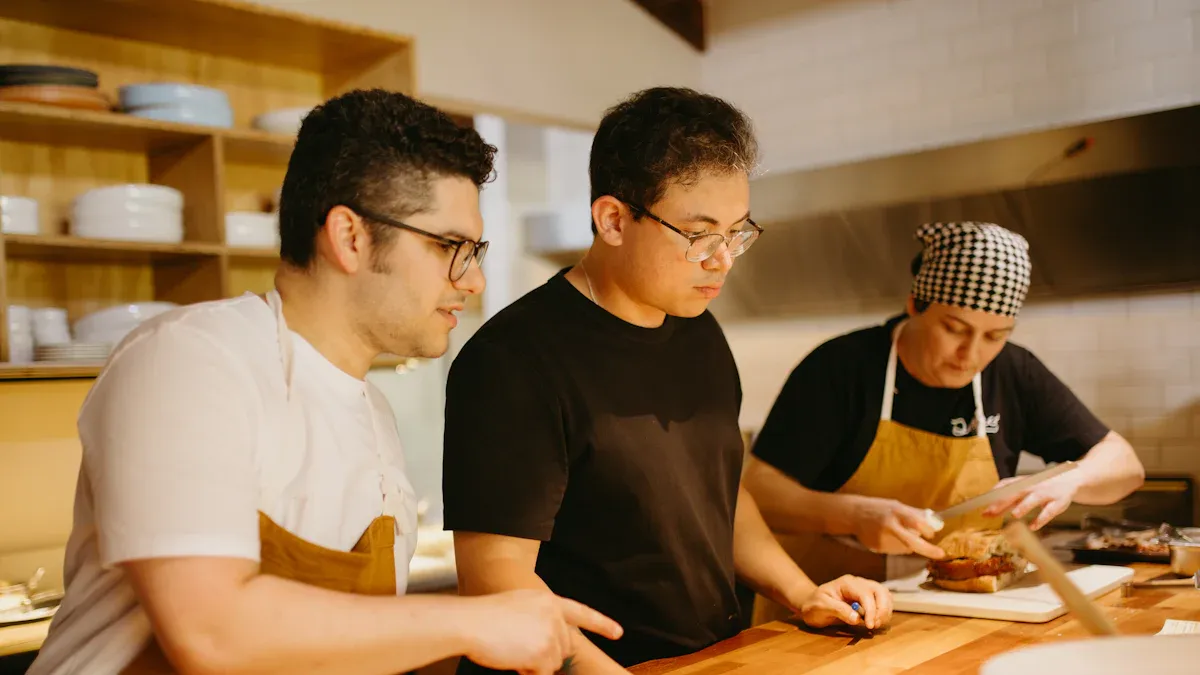
Cooking at home can be a delightful experience! Did you know that 81% of people prepare more than half of their meals at home? Yet, many face challenges like boiling eggs perfectly or knowing when meat is done. Practical cooking tips can help you overcome these hurdles and enhance your skills.
Key Takeaways
Organize your kitchen for efficiency. Keep tools and ingredients within reach to make cooking easier.
Measure ingredients accurately. Use the right tools to ensure consistent results, especially in baking.
Use sharp knives for safer and quicker food prep. They enhance control and preserve ingredient quality.
Prep Tips
Organize Your Workspace
A well-organized kitchen can make cooking a breeze. Start by arranging your tools and ingredients logically. Keep frequently used items within reach to minimize unnecessary movement. Here are some kitchen tips to enhance your workspace:
Place equipment in a sequence that matches your cooking process.
Use shelves and racks to optimize storage space.
Label containers for easy access.
Choose durable materials for surfaces to ensure cleanliness.
Measure Ingredients Accurately
Accurate measurements are crucial for successful cooking. Using the right tools can make a big difference. Here’s a quick guide:
Measuring Tool | Description |
|---|---|
Scales | Digital scales provide the most accurate measurements, especially for baking. |
Liquid Measuring Cups | Clear cups are preferred for their readability and microwave safety. |
Adjustable Measuring Cups | Great for sticky ingredients; they feature a plunger for easy unloading. |
Measuring Spoons | Reliable designs help ensure accuracy; consider brands like Cuisipro. |
Dry Measuring Cups | Quality cups are stackable and accurate; OXO Good Grips is a top choice. |
Weighing ingredients not only saves time but also ensures consistent results, especially in baking where precision matters.
Use Sharp Knives
Using sharp knives is one of the best cooking tips you can follow. They allow for precise cuts and enhance control, reducing the risk of injury. Here’s why you should keep your knives sharp:
Sharp knives make food prep quicker and easier.
They preserve the quality of your ingredients.
You’ll find that they require less force, making cooking more enjoyable.
Practice Mise en Place
Mise en place means “everything in its place.” This technique can streamline your cooking process. Follow these steps:
Read the recipe and plan your approach.
Gather all ingredients and tools.
Chop, slice, and prepare ingredients as needed.
Pre-measure ingredients into bowls.
Organize them in the order they will be used.
Clean as you go to maintain a tidy workspace.
Use a Timer
Timers are essential for perfect cooking. They help you avoid overcooking or burning your food. Here’s how they can improve your results:
Set timers for boiling pasta to achieve the right texture.
Use them when baking cookies to prevent burning.
Track simmering times for sauces to ensure flavors meld perfectly.
Incorporating these prep tips into your routine can elevate your cooking experience and lead to delicious results!
Cooking Skills
Control Cooking Temperatures
Controlling cooking temperatures is key to achieving great results. Different stovetops can present challenges. For example, many lack accurate temperature sensing, which can lead to overcooking. Here’s a quick look at some common issues:
Challenge | Description |
|---|---|
Lack of Temperature Sensing | Many stovetops don’t accurately sense the temperature of cookware. |
Poor User Interface | Some stovetops have confusing controls, making temperature adjustments tough. |
Inefficient Heating Mechanism | On/off cycles can cause temperature fluctuations, leading to uneven cooking. |
To improve your skills, try techniques like steam cooking or sous vide for precise temperature control. These methods help you cook food evenly and efficiently.
Brown Meat Properly
Browning meat is more than just a visual appeal; it enhances flavor too! The Maillard reaction occurs when proteins and sugars react under heat, creating delicious compounds. Here’s why proper browning matters:
Aspect | Description |
|---|---|
Reaction Type | Involves complex reactions between proteins and sugars. |
Temperature Requirement | Occurs at lower temperatures than caramelization, mainly in dry-heat cooking methods. |
Resulting Effects | Produces a rich brown color and boosts flavor, making your meat more enjoyable. |
When you sear meat correctly, you lock in juices and create a tasty crust. This technique works best in roasting, frying, and grilling.
Cover the Pan
Covering the pan can significantly improve your cooking outcomes. It helps retain heat and moisture, especially when simmering or boiling. For instance, when cooking pasta, placing a lid on the pot speeds up the boiling process. This simple trick ensures that flavors meld effectively in soups and stews.
Taste and Adjust Seasoning
Tasting as you cook is essential for achieving the right flavor. Here’s a simple method to adjust seasoning:
Taste the dish to assess its current flavor.
Identify the flavors present.
Gradually add small amounts of salt and pepper, tasting after each addition.
Continue adjusting until the flavor meets your preference.
Remember, it’s easier to add seasoning than to remove it, so start small!
Resist Constant Stirring
While it might be tempting to stir constantly, resist the urge! Allowing food to sit undisturbed can help develop flavors and textures. For example, when searing meat, let it brown before flipping. This technique enhances the overall taste and appearance of your dishes.
Incorporating these cooking skills into your routine will elevate your culinary game and lead to delicious meals!
Flavor Boosting Tips
Incorporate Acid for Balance
Adding acid to your dishes can elevate flavors and create balance. Here are some common acids you can use:
Citric Acid: Found in citrus fruits, it adds brightness and works best when fresh.
Lactic Acid: Present in fermented foods, it gives a softer flavor and uplifts earthy dishes.
Acetic Acid: The main component of vinegar, it balances flavors, especially with fats.
Malic Acid: Found in green apples, it offers a subtler acidity that enhances dishes.
Using these acids can transform your meals from ordinary to extraordinary!
Deglaze the Pan
Deglazing is a fantastic technique that enhances the flavor profile of your dishes. When you deglaze, you dissolve the caramelized bits left in the pan with a liquid. This process creates a rich sauce that maximizes flavor. Here’s how it works:
It transforms browned bits (fond) into a savory sauce.
You unlock concentrated flavors that would otherwise go to waste.
Alcohol and stock are great choices for achieving the best flavor.
Next time you cook, don’t forget to deglaze!
Use Marinades and Rubs
Marinades and rubs are excellent for infusing flavor into proteins. Marinades often contain oil, vinegar, spices, and herbs, while rubs consist of a mix of spices, salt, and sugar. Here are some key ingredients to consider:
Oil: Adds moisture and flavor.
Vinegar: Provides acidity and helps tenderize.
Spices: Enhance overall flavor.
Herbs: Add aromatic qualities.
Using these can make your meat more flavorful and tender.
Experiment with Flavor Combinations
Don’t be afraid to mix and match flavors! Some scientifically proven combinations can enhance your meals. For example:
Chocolate and coffee share roasted notes.
Tomato and basil complement each other beautifully.
Beef and mushrooms enhance umami flavors.
Try these combinations to discover new favorites!
Taste as You Cook
One of the best cooking tips is to taste as you go. This practice helps you adjust flavors and ensures your dish turns out just right. Start with small amounts of seasoning and gradually add more until you achieve the desired taste. Remember, it’s easier to add than to take away!
Incorporating these flavor-boosting tips will help you create delicious meals that impress your family and friends!
Kitchen Organization Tricks
Store Ingredients Properly
Storing ingredients correctly can extend their shelf life and keep your kitchen organized. Here are some essential kitchen tips for proper storage:
Always maintain temperature and humidity levels.
Keep foods at least 6 inches off the floor for better air circulation.
Use airtight containers for raw foods to prevent spoilage.
Organize your fridge with raw foods at the bottom and ready-to-eat items at the top.
Following these guidelines can help you minimize waste and keep your ingredients fresh longer.
Label and Date Your Food
Labeling and dating your food can significantly reduce waste. Many people misinterpret date labels, leading to unnecessary disposal of perfectly good food. Here’s a quick look at why this practice is essential:
Evidence Description | Key Insight |
|---|---|
Misinterpretation of dates | Consumers often throw away food that is still safe. |
Importance of understanding | Knowing what the dates mean can prevent waste. |
By clearly labeling your food, you can easily track what needs to be used first, ensuring nothing goes to waste.
Invest in Quality Tools
Quality kitchen tools make cooking easier and more enjoyable. Here are some must-have items recommended by professional chefs:
Tool | Purpose | Price Range |
|---|---|---|
12-Inch Stainless Skillet | Perfect for searing and oven-finish cooking | $45 – $80 |
Instant-Read Thermometer | Ensures accurate cooking temperatures | $34 – $116 |
Immersion Blender | Blends soups and sauces directly in the pot | $40 – $120 |
Investing in these tools can elevate your cooking experience and help you achieve better results.
Create a Cooking Schedule
Creating a cooking schedule can save you time and reduce stress. Planning your meals for the week helps eliminate the last-minute scramble of deciding what to cook. Here are some benefits:
It reduces the number of decisions you need to make daily.
Preparing ingredients ahead of time makes cooking smoother.
Knowing what to cook simplifies your grocery shopping.
Use Prepped Ingredients
Using prepped ingredients can make cooking a breeze. When you have ingredients ready to go, you can whip up meals quickly. Here’s why it’s beneficial:
It saves time during busy weeknights.
Prepping encourages you to use perishable items before they spoil.
It helps you plan meals around what you already have.
Incorporating these kitchen organization tricks will help you create a more efficient and enjoyable cooking environment!
Cooking at home can be a joyful adventure! By trying out these practical tips, you’ll boost your skills and confidence. Many home cooks report improved meals and greater enjoyment when they embrace new techniques. So, gather your ingredients, get creative, and enjoy the process of cooking delicious meals! 🍽️
FAQ
What is the best way to store fresh herbs?
Store fresh herbs in a glass of water, like a bouquet. Cover them loosely with a plastic bag to keep them fresh longer. 🌿
How can I prevent my pasta from sticking together?
Add a splash of oil to the boiling water or stir the pasta occasionally while cooking. This helps keep it separate. 🍝
What’s the secret to perfect scrambled eggs?
Cook eggs on low heat, stirring gently. This creates creamy, soft curds for delicious scrambled eggs. 🥚
