
Book Appointment Now

8 Best Filtering Water Pitchers for 2026: Fresh Taste, Zero Fuss

Tap water varies wildly from one zip code to the next, and a pitcher filter is the simplest fix most households will ever need. Whether you’re refilling bottles before a commute or keeping a dispenser stocked for a family of four, the right pitcher turns questionable tap water into something you’ll actually want to drink. This shortlist covers compact dorm-size options through family-scale dispensers, including models certified to reduce lead and PFAS.
The Shortlist At A Glance
PickWhy We Picked ItBest ForAction

Editor’s Choice
Culligan ZeroWater 10-Cup Pitcher Water Filter
Deep five-stage filtration
PFAS-conscious households

Value Pick
Waterdrop PT-04B 10-Cup Pitcher with 4 Filters
Ships with four filters
Budget-minded families
Heavy Duty Pick
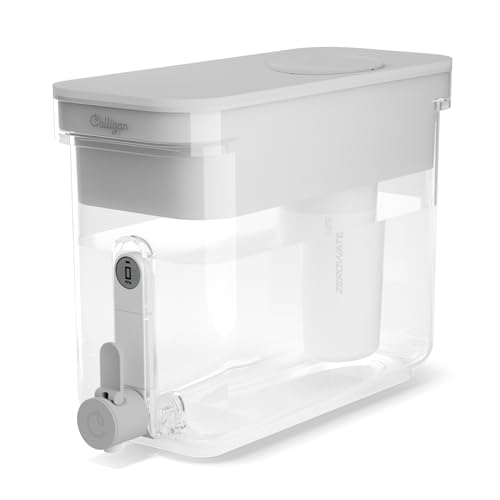
Culligan ZeroWater 32-Cup Filter Dispenser
Family-scale capacity
Large households
Well Rounded Pick
Brita X-Large 27 Cup Pitcher Dispenser (White)
Mineral-balanced taste
Fridge-door storage

Everyday Favorite
Culligan ZeroWater 12-Cup Pitcher Water Filter
Sweet-spot midsize capacity
Couples and small families

Long Filter Life
Epic Pure Filter Pitcher 10 Cup (White & Bamboo)
150-gallon filter rating
Low-maintenance owners

Compact Choice
PUR Slim 8-Cup Water Filter Pitcher (Blue)
Slimmest footprint here
Dorms and mini fridges

Design Standout
Waterdrop PT-09W 10-Cup Glass Filter Pitcher
Glass body, no plastic taste
Style-first kitchens
More Details On Our Top Picks
This 10-cup pitcher runs water through five separate stages rather than a single carbon cartridge, which is why it’s the pick for anyone worried about dissolved solids. The manufacturer states it’s certified to reduce lead, chlorine, mercury, and Total PFAS, the so-called forever chemicals that standard carbon filters often leave behind.
In a busy kitchen, that depth shows up in the glass: water comes out tasting flat-clean, closer to distilled than to bottled spring. The trade-off is patience, since multi-stage filters pour slower than basic ones.
Strong Points
- Certified reduction of lead and Total PFAS gives real peace of mind in older homes or areas with aging pipes
- Five-stage design strips more dissolved solids than single-carbon rivals like the Brita below
- 10-cup body fits most refrigerator shelves without hogging space
- Handles daily refill duty for two to three people comfortably
Things To Consider
- Denser filtration media means slower fill times, which you may notice when topping off after workouts
- Five-stage cartridges are typically pricier to replace over time than simpler filters
Key Specs
Made For
Households in older buildings or PFAS-flagged regions who want maximum contaminant reduction from a countertop pitcher.
A Better Fit Elsewhere
The Waterdrop PT-04B suits shoppers who mainly want better-tasting water on a tighter replacement budget, since its four included filters stretch further.
Where the Culligan above chases maximum contaminant removal, this Waterdrop plays the long game: the box includes four filters, so you’re set for well over a year of typical use before buying anything else. That bundling makes the math easy for anyone who hates subscription-style cartridge shopping.
The pitcher itself holds 10 cups and carries NSF/ANSI 42 certification, an independent standard covering chlorine taste and odor reduction. Owners commonly report noticeably cleaner-tasting water within the first fill, though heavy-metal claims aren’t this model’s headline strength.
What We Like
- Four included filters mean fewer replacement purchases during year one
- NSF/ANSI 42 certification backs up the chlorine-reduction claims with third-party verification
- Standard 10-cup footprint slots into most fridge shelves alongside leftovers
Minor Gripes
- Chlorine-focused filtration won’t address lead or PFAS the way the Culligan ZeroWater line does
- Lid seals on budget pitchers can loosen over months of daily handling, based on widely reported owner feedback
Right Fit For
Renters and first-time pitcher owners whose municipal water tastes fine chemically but smells faintly of the pool.
Swap It Out When
Choose the Culligan ZeroWater 10-Cup instead if your local water report lists lead or PFAS detections, because that model targets them directly.
Thirty-two cups is dispenser territory, not pitcher territory. This unit takes the same five-stage filtration as the smaller Culligan picks and scales it for a household that empties a normal pitcher twice before lunch. Think four kids home for summer, or a home office where everyone refills bottles.
The spigot matters more than the size here. A bottom-mounted tap lets glasses fill themselves without lifting, which saves your wrists and keeps the fridge door shut longer. Same certified lead and PFAS reduction as its siblings, just with far fewer refills per week.
Highlights
- 32-cup reservoir covers a full day of drinking water for a family of four or more
- Spigot dispensing means no lifting, helpful for kids and anyone with grip issues
- Identical five-stage, PFAS-and-lead-certified filtration as the smaller Culligan units
- One weekly refill replaces several pitcher trips
Softer Spots
- Demands serious fridge real estate; measure your shelf clearance before ordering
- A large reservoir takes noticeably longer to filter through completely
- Spigots need occasional cleaning to stay drip-free, a common note in owner discussions
Who Should Grab It
Large families, shared houses, and small offices that burn through pitcher-sized volumes by midmorning.
Another Choice May Suit
The Brita 27-cup dispenser below fits similar volumes in a slimmer frame, suiting households short on shelf depth.
Brita’s UltraMax format has been a kitchen-counter fixture for years, and this 27-cup version pairs that familiar shape with the newer BritaPlus filter. The upgrade matters: the high-density cartridge is rated to reduce roughly double the contaminants of Brita’s standard filter while leaving beneficial minerals in the water, so the taste stays naturally balanced rather than stripped flat.
Compared with the Culligan 32-cup dispenser, you give up three cups of volume and PFAS-specific certification, but gain faster pours and cheaper, easier-to-find cartridges. For most suburban homes on decent municipal supply, that’s a fair trade.
Upsides
- BritaPlus filter retains minerals and electrolytes for balanced flavor, not flat distilled taste
- Rated to reduce chlorine taste and odor plus mercury, cadmium, copper, and zinc
- 27 cups handles a family day without constant refilling
- Brita cartridges are sold nearly everywhere, simplifying replacements
Points To Note
- No stated PFAS reduction, unlike the Culligan ZeroWater models in this list
- The wide dispenser body may not fit narrow French-door fridge shelves
At A Glance
Who Will Love This
Families who want big-capacity convenience and pleasant mineral-forward taste without chasing specialty certifications.
Reach For A Different Pick When
Households with PFAS concerns should step up to the Culligan ZeroWater 32-Cup Dispenser, which certifies that reduction directly.
This is the middle child of the Culligan trio: same five-stage, PFAS-and-lead-certified filtration as the 10-cup opener, with two extra cups of headroom. Those extra cups sound trivial until you’re filling a pasta pot or a coffee maker and come up half a liter short.
For couples or a parent with one kid, 12 cups usually covers a full day between refills. You keep the deep-contaminant performance without committing fridge space to a dispenser. The honest caveat stays the same across the whole ZeroWater line: dense filtration means slower pours, and cartridges cost more to swap than basic carbon ones.
Bright Spots
- Certified reduction of lead, Total PFAS, chlorine, and mercury in a pitcher-sized body
- 12-cup capacity bridges the gap between personal pitchers and bulky dispensers
- Enough volume for cooking and coffee without a second trip to the tap
Small Caveats
- Slower filtration speed than single-stage competitors, noticeable when filling cookware
- Replacement cartridges run higher than mainstream brands like Brita or PUR
Whose Shelf It Belongs On
Two-to-three-person households in areas with lead plumbing or PFAS advisories who still want a true pitcher format.
Not Your Match When
Apartment dwellers with tight mini-fridge shelves will find the PUR Slim 8-Cup a smarter spatial fit, trading capacity for a narrower profile.
Most pitcher filters need swapping every couple of months. Epic rates this one for 150 gallons, which translates to many months of typical household use per cartridge. Fewer changes mean lower running costs and less plastic heading to the bin, a combination that explains the brand’s following among low-maintenance types.
The solid carbon block targets fluoride, chlorine, lead, and PFAS compounds, a broader contaminant list than most carbon-only rivals attempt. The Tritan body is BPA-free plastic accented with bamboo, and at roughly 10 inches square and 2 pounds empty, it slides onto a fridge shelf without drama. Solid carbon blocks pour slowly under gravity, so expect a patient fill.
Reasons To Buy
- 150-gallon rated filter life cuts replacement frequency dramatically versus monthly-swap pitchers
- Carbon block addresses fluoride along with lead, chlorine, and PFAS
- Tritan construction is BPA-free and lightweight at about 2 pounds
- Compact 10-inch footprint suits crowded refrigerator shelves
Honest Caveats
- Dense carbon block filtration fills slowly compared with the Brita dispenser
- Bamboo accents need dry conditions; standing water around the base can degrade the trim over time
Quick Facts
Best Suited To
Busy owners who forget filter changes and want a set-it-and-forget-it schedule with broad contaminant coverage.
Consider Something Else When
Shoppers prioritizing fast refills over longevity will prefer the PUR Slim, whose lighter filtration media pours quicker.
Dorm rooms, studio apartments, and office break rooms all share one constraint: no spare shelf width. PUR built this pitcher for exactly that problem, claiming roughly a third more capacity than standard small pitchers while keeping a slim silhouette that squeezes beside milk cartons in a mini fridge.
The 2-in-1 cartridge combines activated carbon, which adsorbs chlorine and organic compounds, with ion exchange, a process that swaps unwanted dissolved ions for harmless ones. Filtration runs quick for the category, handy when you’re refilling between classes. Being dishwasher safe is a genuine perk in shared living, where hand-washing discipline tends to slip.
Plus Points
- Slim profile fits mini-fridge shelves where wider pitchers simply won’t go
- Holds about 33% more than comparable small pitchers despite the narrow frame
- Dishwasher-safe body simplifies cleaning in shared spaces
- Fast filtration suits frequent small refills
Trade Offs
- 8 cups means refilling multiple times daily for anything beyond solo use
- Carbon-plus-ion-exchange media doesn’t match the PFAS certification of the Culligan models
Feature Snapshot
The Right Fit
Students, solo renters, and desk workers who need filtered water in minimal fridge space.
Look Elsewhere When
Roommates sharing a fridge should pool for the Epic Pure Pitcher instead, gaining 10 cups and far longer filter life for modestly more space.
Every other pitcher on this list is plastic. This Waterdrop goes glass, which solves two complaints at once: no lingering plastic smell in fresh water, and a body that cleans up streak-free instead of clouding over the years. On a counter, it reads more like serveware than equipment.
Underneath the good looks sits serious paperwork: the filter carries NSF/ANSI 53, 42, and 372 certifications, covering health-related contaminant reduction such as PFOA/PFOS, cadmium, copper, and mercury alongside chlorine taste. Compared with the PT-04B earlier in this list, you trade bundled spare filters for a nicer vessel and stronger certification coverage.
Standout Traits
- Glass body eliminates plastic taste transfer and wipes clean without clouding
- Triple NSF/ANSI certification spans health, aesthetic, and material-safety standards
- Rated to reduce PFOA/PFOS, cadmium, copper, and mercury
- 10-cup capacity matches the category standard
Areas To Watch
- Glass demands gentler handling around sinks and tile floors; a drop ends the party
- Heavier than plastic rivals when full, worth noting for weaker grips
Details At A Glance
Who It Suits Best
Design-conscious homeowners who serve water at the table and prefer glass over plastic for taste and aesthetics.
Where A Sibling Pick Shines
Clumsy households or families with young kids should stick with the shatterproof Epic Pure Pitcher, which offers similar contaminant breadth in durable Tritan.
What Matters Most Before Choosing Filtering Water Pitchers
Match Capacity To Your Household Rhythm
A pitcher that’s too small becomes a chore; one that’s too large wastes fridge space. Solo drinkers do fine with 8 cups, couples land comfortably at 10 to 12, and families of four or more should look at 27-cup-plus dispensers with spigots. Count how many times per day your current setup gets emptied, then size up one notch.
Read Certifications, Not Marketing Copy
NSF/ANSI numbers tell you what a filter actually reduces: 42 covers chlorine taste and odor, 53 covers health-related contaminants like lead, and 372 verifies material safety. Brands certify specific claims, so a pitcher certified only for chlorine won’t touch PFAS regardless of what the box implies. Check your local water quality report first, then buy against those findings.
Factor In True Running Costs
The sticker price is only the entry fee. Cartridge price multiplied by replacement frequency determines what a pitcher really costs per year, and long-life filters like Epic’s 150-gallon rating can undercut cheaper pitchers over time. Slower, denser filters also cost you minutes per fill, which adds up in busy kitchens.
Key Considerations Across These Picks
Traps First Timers Fall Into
The classic error is buying on capacity alone and ignoring what the filter is certified to reduce. Another common miss: skipping the fridge-shelf measurement, then discovering a 32-cup dispenser doesn’t fit under the crisper drawer. Always verify cartridge availability locally, too, since an orphaned filter format turns a good pitcher into landfill.
When Paying More Pays Off
Higher-tier models earn their premium through certified contaminant reduction, longer filter life, and better materials like glass or bamboo-accented Tritan. Households with confirmed water-quality issues get clear value from five-stage systems. Everyone else can save money with a straightforward carbon filter and spend the difference on cartridges.
Frequently Asked Questions
How often should I replace a pitcher filter?
Follow the manufacturer’s gallon or month rating printed on the cartridge. Most standard filters run two months, while long-life blocks like Epic’s 150-gallon unit last considerably longer.
Do pitcher filters remove fluoride?
Only some do. Solid carbon block designs such as the Epic Pure Pitcher target fluoride, while basic activated carbon filters generally don’t.
Can a pitcher filter remove lead?
Yes, but only models specifically certified for it, like the Culligan ZeroWater line. Never assume a generic carbon filter handles lead.
Are glass pitchers better than plastic?
Glass avoids plastic taste transfer and cleans without clouding, but it breaks. Plastic pitchers like Tritan models offer durability for busy or clumsy households.
Why does my filtered water taste flat?
Deep multi-stage filtration removes dissolved solids that contribute to flavor. Filters that retain minerals, like BritaPlus, preserve a more naturally balanced taste.
Closing Remarks
The right choice comes down to your water report and your fridge space more than any ranking. Start with what’s actually in your tap water, match the certification to it, then pick the capacity your household won’t resent refilling. Any of these eight will outperform unfiltered tap; the rest is fit.
