
Book Appointment Now

8 Best Drinking Cups for the Elderly for 2026

A shaky grip or a weak hand shouldn’t turn a glass of water into a daily hazard. The right cup changes that: two handles instead of one, a lid that catches spills, or a straw that works while lying down. This list covers eight options built for seniors, caregivers, and anyone recovering at home.
The Shortlist At A Glance
PickWhy We Picked ItBest ForAction

Practical Pick
Medline Graduated Insulated Carafes, Clear
Clear fluid-intake tracking
Caregivers monitoring hydration

Everyday Favorite
Copco Lock-n-Roll Spill-Proof Tumbler 20-Ounce
Locking flip straw design
Active seniors on the go

Value Pick
Qancesd Adult Sippy Cup 12oz with 2 Handles
Dual-handle no-spill build
Tremor-prone hands
Reliable Runner Up
Qancesd Adult Sippy Cup 12oz (Red)
Edge-placed straw hole
Weaker hands and tremors

Feature Rich
HOSUKU Adult Sippy Cup 13.5 oz, 2 Lids
Three drinking configurations
Bedridden and reclined users
Heavy Duty Pick
HOSUKU Adult Sippy Cups 2 Pack, Stainless Steel
Weighted straw for reclining
Care facilities needing spares

Well Rounded Pick
Homecraft Clear Polycarb Mug with 2 Lid Options
Shatterproof polycarbonate body
Limited grip and reach
Compact Choice
Vakly Insulated Hospital Carafe 18 oz
Snap-on leak-resistant lid
Bedside hydration tracking
More Details On Our Top Picks
This three-pack of clear insulated carafes solves a problem most cups ignore: knowing how much someone actually drank. Ounce and milliliter markings run up the side, so a caregiver can log intake at a glance without pouring anything into a measuring cup.
The double-wall construction keeps cold drinks cold longer and cuts down on exterior condensation, which matters when the carafe sits on a nightstand or wheelchair tray. Each unit holds 32 ounces, enough to cover most of a day’s water in one fill.
Strong Points
- Graduated ounce and milliliter lines make hydration logging effortless for nurses and family caregivers alike.
- Double-wall insulation keeps beverages at temperature through long afternoons.
- A 32-ounce capacity means fewer refills for anyone with limited mobility.
- Three carafes per pack let you rotate one in the wash while two stay in service.
Things To Consider
- The wide pitcher shape suits pouring more than independent sipping, so pair it with a handled cup from this list.
- Plastic bodies can cloud over months of dishwasher cycles depending on your detergent.
Key Specs
Made For
Caregivers and home health aides who need to track daily fluid intake accurately across multiple rooms or patients.
Where A Sibling Pick Shines
For direct hands-free sipping rather than pouring, the Qancesd 12oz cup with two handles gives tremor-prone users more independence.
Where the Medline carafes are built for bedside duty, this Copco tumbler is built for life outside the house. The patented flip-up straw locks closed, so a tumbler rolling around in a tote bag or car cup holder stays dry. That single detail makes it a strong companion for seniors who still drive, garden, or attend appointments.
The soft-grip sleeve adds friction for arthritic fingers, and the double-wall clear body keeps condensation off the surface you set it on. You get four tumblers in a pack, each holding 20 ounces of cold beverage.
Bright Spots
- The locking flip straw seals shut between sips, protecting bags and upholstery from leaks.
- A soft-grip sleeve gives unsteady hands something secure to hold.
- Standard footprint fits most car cup holders, handy for errand days.
- Four-pack value covers a household or leaves spares for visitors.
Small Caveats
- Top-rack dishwasher cleaning only; heat from lower racks can warp the lid over time.
- Designed for cold drinks, so hot tea or coffee is off the menu here.
Who Should Grab It
Mobile seniors and anyone with mild grip weakness who wants a dependable travel tumbler rather than a clinical aid.
Swap It Out When
Bedside or reclined drinking calls for the HOSUKU weighted-straw cup instead, which keeps liquid reachable at any tilt angle.
Two handles change everything for a hand that shakes. This Qancesd cup lets a user wrap both palms around the body, which steadies the lift far better than any single-handle mug can. The food-grade plastic and silicone build stays transparent, so liquid level and cleanliness stay visible at all times.
At 12 ounces, the weight stays manageable even when full, which is exactly what weak grip strength needs. Caregivers often report that adaptive cups like this restore a measure of self-sufficiency, cutting down on how often someone has to ask for help with a basic drink.
Reasons To Buy
- Dual ergonomic handles support a two-handed grip that resists tremors and slips.
- No-spill lid design limits messy accidents on bedding and clothing.
- Clear walls show liquid level instantly, useful for both user and caregiver.
- Lightweight 12-ounce format suits limited arm strength and short reaches.
Points To Note
- Straw components need regular disassembly and rinsing to keep residue from building up in the valve.
- The smaller capacity means more frequent refills during hot weather.
Quick Facts
Right Fit For
Seniors with Parkinson’s-related tremors or post-stroke weakness who want to drink independently at a table or in a chair.
Consider Something Else When
Drinking happens mostly while lying down; the HOSUKU 13.5 oz cup with its gravity-ball straw handles reclined positions far better.
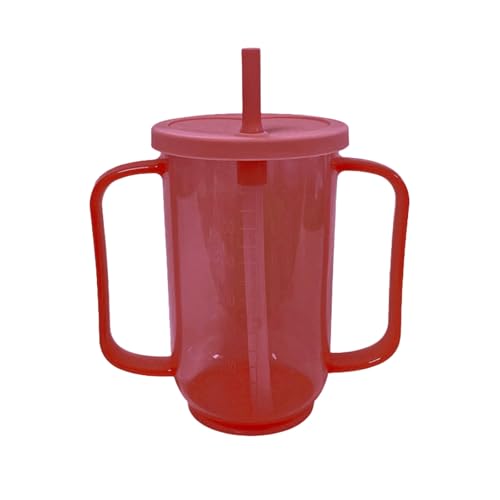
This red variant shares the same two-handle DNA as the Qancesd cup above but earns its own spot for one refinement: the straw opening sits close to the lid’s edge. That placement lets a user sip without tilting the cup far, a small geometry tweak that pays off big for stiff necks and limited range of motion.
The bright red color also helps users with low vision locate the cup on a tray or table, something the clear-bodied version doesn’t offer. Same 12-ounce size, same spill-resistant intent, different strengths.
Upsides
- Edge-positioned straw hole reduces how far the cup must tilt to drink.
- High-visibility red finish aids users with declining eyesight.
- Two handles again provide the steady two-handed hold tremors demand.
Softer Spots
- Opaque color hides the liquid level, unlike the transparent sibling pick.
- Lid gaskets benefit from air-drying fully between washes to avoid trapped moisture.
Whose Shelf It Belongs On
Users combining hand tremors with reduced neck mobility or vision loss, especially in assisted-living settings.
Another Choice May Suit
Anyone who needs to see fluid levels at a glance will prefer the transparent Qancesd 12oz model reviewed earlier in this list.
One cup, three ways to drink. Swap the lids and this HOSUKU becomes a straw cup, a feeding cup, or an open everyday tumbler, adapting as a user’s abilities change week to week. For caregivers managing recovery or progressive conditions, that flexibility removes the need to buy new equipment at every stage.
The gravity-ball straw deserves special mention: a weighted end inside the flexible tube follows the liquid as the cup tilts, keeping the sip point submerged even at steep angles. Drinking in bed or propped on a sofa stops being a two-person job.
Standout Traits
- Interchangeable lids deliver straw, spout, and open-cup modes in one purchase.
- Gravity-ball straw tracks liquid through tilts, enabling safe reclined drinking.
- Sealing gasket and secure lid reduce leaks during wheelchair transfers and bed use.
- 13.5-ounce capacity balances manageable weight with fewer refill trips.
Worth Noting
- Multiple small parts mean more pieces to clean and track after each wash.
- You may find the straw assembly fiddly to reassemble until it becomes routine.
At A Glance
Best Suited To
Bedbound or chair-bound users whose drinking position and ability vary day to day, plus the caregivers supporting them.
Reach For A Different Pick When
Simple table-top drinking is the only requirement; the Homecraft polycarb mug strips away the complexity at a friendlier price point.
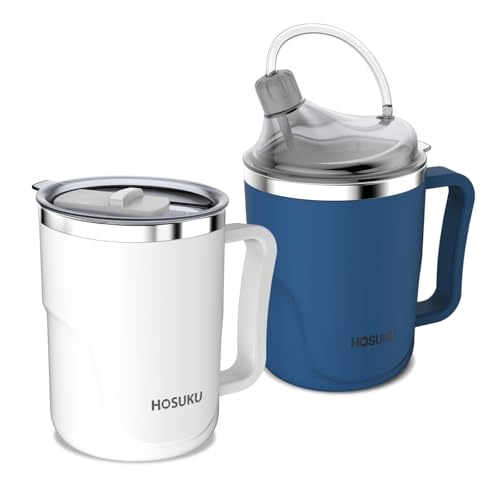
Think of this as the HOSUKU single cup’s sturdier sibling, doubled. Two stainless-steel bodies, one blue and one white, each ship with straight-straw, weighted-straw, and soft-spout setups. Steel brings real advantages in care settings: it survives drops onto tile floors, resists staining from juice and supplements, and holds temperature longer than plastic.
Side handles preserve the two-handed grip that tremor-prone users rely on, and the weighted straw follows liquid through tilts just like the single-cup version. Facilities and multi-generation households get a spare ready before the first one needs washing.
Plus Points
- Stainless bodies shrug off drops and resist odors better than plastic alternatives.
- Each cup offers three drinking modes via included straws and soft spouts.
- Weighted flexible straw keeps liquid accessible while reclined.
- Two color-coded cups help prevent mix-ups in shared care environments.
Honest Caveats
- Steel walls hide the liquid level, so visual intake checks require lifting the lid.
- Hand-washing the straw components extends their life compared with machine cycles.
Who Will Love This
Nursing homes, rehab centers, and busy families who need durable assisted-drinking cups with a backup always on hand.
Not Your Match When
Caregivers depend on seeing fluid levels through the wall; the graduated Medline carafes handle that monitoring role directly.
Homecraft has supplied daily-living aids to hospitals and therapy clinics for decades, and this polycarb mug reflects that institutional pedigree. Polycarbonate, for those new to the material, is a rigid clear plastic that resists shattering when dropped, a genuine safety feature around fragile hips and hard floors.
The design stays deliberately simple: a straightforward mug shape with two lid choices, suited to limited grip and restricted arm movement. There’s no straw system or gravity ball to maintain, which some users will read as a limitation and others as refreshing honesty about what they actually need.
What We Like
- Shatterproof polycarbonate construction stands up to repeated drops safely.
- Two lid options cover both spill protection and open drinking preferences.
- Simple form factor suits users overwhelmed by multi-part adaptive cups.
- Trusted by occupational therapists in clinical and home settings alike.
Minor Gripes
- No weighted straw option, so strictly reclined drinkers should look elsewhere on this list.
- Polycarbonate can develop fine surface scratches after extended dishwashing.
The Right Fit
Seniors with mild grip limitations who want a no-fuss, clinic-grade mug for table and chair-side drinking.
Look Elsewhere When
Reclined or in-bed drinking is the priority; the HOSUKU 13.5 oz gravity-ball cup was designed precisely for that scenario.
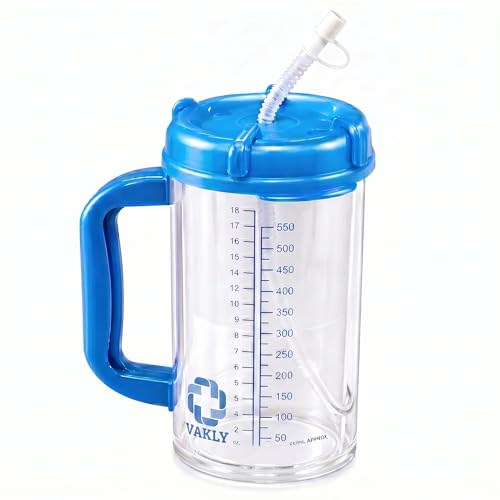
The Medline carafes opened this list at 32 ounces; the Vakly trims the concept down to a bedside-friendly 18. Its molded double-wall insulation holds both hot and cold temperatures for extended stretches, and the layered construction limits condensation pooling under the base.
The snap-on lid seats firmly with a tab for easy removal, and the integrated handle gives caregivers a confident pour. Graduated markings along the body continue the fluid-tracking theme that runs through this entire category.
Highlights
- Double-wall insulation maintains beverage temperature for hours.
- Snap-on lid resists leaks during accidental knocks on the nightstand.
- Graduated markings support accurate daily intake records.
- Compact 18-ounce size fits crowded bedside tables and tray tables.
Areas To Watch
- Smaller capacity means midday refills for heavy drinkers.
- Lid tabs and gaskets deserve gentle handling to keep the seal tight long term.
Core Details
Who It Suits Best
Single users or spare-room guests who want hospital-style hydration tracking without sacrificing nightstand space.
Where Another Pick Suits Better
Households needing higher volume and multiple units will find the Medline 32-ounce three-pack more economical per ounce.
What Matters Most Before Choosing Drinking Cups For Elderly
Grip And Stability First
Hand strength dictates everything else. Two handles beat one, and lightweight materials beat heavy ceramics every time a tremor enters the picture. Hold the cup mentally at its full weight: a 32-ounce carafe filled to the brim weighs several pounds, while a 12-ounce sippy cup stays manageable for most weakened grips.
Position Of Use
Where the drinking happens shapes the right choice. Table sitters do fine with open mugs like the Homecraft. Chair-bound users benefit from lidded straw designs. Anyone drinking reclined needs a weighted or gravity-ball straw, since ordinary straws lose contact with liquid once the cup tips past a shallow angle.
Caregiver Workload
Think about cleaning before buying. Multi-part straw systems offer flexibility but add disassembly time after every use. Simpler mugs trade adaptability for a ten-second rinse. In busy households, that difference compounds daily.
Visibility And Monitoring
Fluid intake tracking matters for many seniors on medical guidance. Graduated markings and transparent walls let caregivers log consumption without guesswork, turning an ordinary cup into a quiet health tool.
Key Considerations Across These Picks
Pitfalls Shoppers Hit
The most common mistake is buying for today’s ability, not next month’s. Conditions progress, and a cup that fits now may not fit later. The second trap is ignoring cleaning reality: intricate straw valves frustrate caregivers who chose them for features alone. Match complexity to the household’s actual routine.
The Case For Spending Up
Higher-tier cups earn their cost through materials and engineering. Weighted straws, stainless bodies, and interchangeable lids cost more to manufacture than a basic tumbler, and they solve problems cheaper cups simply can’t. For progressive conditions, one adaptable premium cup often outlasts three cheap replacements.
Frequently Asked Questions
What makes a cup easier for elderly hands to hold?
Two handles allow a stable two-handed grip that counters tremors and weakness. Lightweight materials and moderate capacity keep the full weight manageable during lifts.
Are weighted straws really necessary?
They matter mainly for reclined drinking, where the straw must follow liquid as the cup tilts. Upright users can skip them without losing anything.
How do I track daily fluid intake accurately?
Choose cups or carafes with ounce and milliliter graduations printed on the side. Transparent walls help too, letting caregivers see levels at a glance.
Can these cups handle hot beverages?
Most adaptive sippy cups are designed for cold drinks, while insulated carafes handle both temperatures. Check the product listing before pouring anything hot.
How should straw components be cleaned?
Disassemble valves and straws after each use and rinse thoroughly, air-drying gaskets separately. Regular deep cleaning prevents residue buildup inside narrow tubes.
Wrap Up
The right cup restores something easy to overlook: the dignity of drinking without help. Match the choice to grip strength, drinking position, and who does the cleaning, and most of these picks will serve well for years. Start with the simplest option that meets the real need, then upgrade only as circumstances demand. Small tool, meaningful difference.
